A client signs one contract. One company designs it, builds it, finishes it, hands over the keys. Done.
That’s the basic pitch behind turnkey projects — and it’s catching on fast across housing, warehouses, hospitals, even power plants. No juggling ten contractors. No finger-pointing when something goes wrong. Just one developer, start to finish.
But is it really that simple? Mostly, yes. Sometimes, not quite.
So what actually is a turnkey project?
The name says it all, really — the client shows up, turns the key, walks in. Everything’s done. A turnkey developer handles the whole journey: feasibility studies, design, planning permission, procurement, construction, and final handover. Cost control, scheduling, quality, compliance — all under one roof.
Compare that to traditional procurement, where a client might be juggling separate contracts for architects, builders, and specialist subcontractors all at once. Messy, sometimes. Turnkey projects skip that entirely.
How it plays out on the ground
It usually starts with a brief — budget, performance requirements, intended use — and then the developer just… takes it from there.
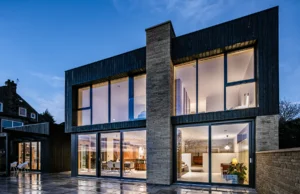
Picture a housing association that needs an apartment block built. Under a turnkey arrangement, they hand over a brief and basically step back. Landscaping, utilities, interior finishes, the lot — all delivered as one finished package, ready for people to move in.
This setup shows up most often in residential schemes, industrial warehouses, logistics centres, healthcare and education buildings, and energy infrastructure. The thing is, it only works if the early planning is rock solid. Get the spec wrong at the start, and there’s not much room to fix it later.
Why clients like it
Accountability tops the list. One company, one point of contact — fewer arguments about whose fault something is.
Then there’s speed. Because design and construction can overlap rather than happening in strict sequence, turnkey projects often move faster than traditional ones. Builders can start planning before the design’s even finalized.
Cost predictability matters too. Fixed-price contracts are standard here, so clients know roughly what they’re paying upfront — no nasty surprises halfway through.
And for organisations without construction expertise in-house? Not having to manage daily site activity is, frankly, a relief.
One more thing: quality tends to hold together better. When one team owns design and execution, there’s less chance of the finished product drifting from the original vision.
Now, the catch
Here’s where it gets less straightforward.
Handing everything to one developer means handing over control too. Once contracts are signed, clients have limited say in day-to-day decisions — design tweaks, material swaps, whatever comes up.
And the specs? They need to be airtight from day one. Want to change something significant later? That can get expensive, fast — sometimes prohibitively so.
There’s also risk concentration. Risk shifts away from the client, sure, but it piles up on the developer’s side — and developers price that in. Higher contract costs are often the trade-off for that peace of mind.
Then there’s the obvious one: everything depends on the developer being good at their job. A weak project manager can still cause delays or quality problems, turnkey contract or not.
Flexibility during construction? Pretty limited. Traditional models allow for progressive adjustments. Turnkey projects, once underway, tend to follow a tighter, more rigid path.
Talking money
Turnkey contracts usually run on fixed-price or guaranteed maximum price structures — which sounds simple, but requires serious upfront negotiation.
What goes into the pricing? Lump sums based on agreed specs, milestone-based payments, performance guarantees (with penalties if deadlines slip), and clauses covering unforeseen circumstances.
Yes, turnkey pricing can look steep at first glance compared to other procurement routes. But factor in fewer variation costs and a much higher chance of hitting deadlines, and the gap often narrows — sometimes disappears entirely.
What the developer actually does
A turnkey developer isn’t just a builder wearing a fancier title. They’re coordinating design teams, securing approvals, managing supply chains and subcontractors, ensuring everything meets building regs, and overseeing quality right through to commissioning.
Some go further still — offering maintenance planning or training for whoever’s running the building once it’s operational. Their job, fundamentally, is keeping a complex project aligned with what the client actually wanted, from the first sketch to the final walkthrough.
Where this shows up in real life
In housing, turnkey delivery often handles large apartment complexes or social housing — local authorities commission a developer, and finished homes appear ready for tenants, no public-sector project management headaches required.
In industrial settings, think warehouses and logistics hubs. A company expanding its distribution network might need a fully operational warehouse on a tight deadline — turnkey projects are built for exactly that kind of pressure.
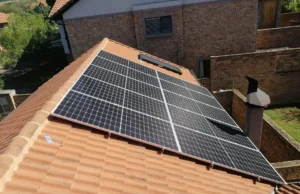
Energy and infrastructure schemes — solar farms, power plants — lean on turnkey contracts too, mostly because the technical and regulatory complexity practically demands one party owning the whole engineering-procurement-construction chain.
Where it’s all heading
A few trends keep showing up. Digital tools — BIM, digital twins — are making coordination tighter and catching design clashes before they become expensive mistakes on-site.
Sustainability’s no longer optional, either. Clients want low-carbon materials and energy-efficient systems baked in from the start, not bolted on as an afterthought.
Modular construction is picking up steam too — building chunks off-site in controlled factory conditions, then assembling on location. Faster, often higher quality, less waste.
And risk transfer keeps growing. Clients increasingly want certainty over cost and timeline, even if it means handing more risk to the developer. Which, again, is basically the whole turnkey pitch in a nutshell.
A quick example: building a warehouse
Say a logistics company needs a new distribution centre. Under turnkey delivery: the developer designs the layout around how the company actually operates, sorts planning permission and utilities, builds fast using accelerated methods, fits out racking and loading bays, then hands over a fully operational facility.
The company doesn’t lift a finger during construction. They just show up when it’s ready.
Turnkey or traditional — which wins?
Depends what you need. Traditional procurement still makes sense when design flexibility matters, when requirements are likely to shift, when a client has strong in-house project management, or when cost transparency across individual contracts is a priority.
Turnkey projects make more sense when speed, certainty, and minimal hassle are what matter most.
Bottom line
Turnkey projects offer something genuinely appealing: streamlined delivery, predictable costs, and far less day-to-day involvement. Consolidating everything under one developer cuts through a lot of the usual coordination chaos.
But it’s not a free lunch. Specifications need to be nailed down early, trust in the developer matters enormously, and clients give up a fair amount of control along the way.
Still, as construction speeds up and certainty becomes more valuable than ever, turnkey projects aren’t going anywhere. If anything, expect to see more of them — across housing, commercial builds, and infrastructure alike.