There is a particular kind of architect who specifies timber for everything right now. Timber frames, timber cladding, timber interiors. It looks ever so beautiful and modern in the renderings, and it certainly photographs well for the awards submissions (look at how clean and natural it all feels), and it also comes with a ready-made sustainability narrative that clients love. Wood is natural. Wood feels right. Wood, as we are so often told, stores carbon.
Much like coffee that isn’t single origin, what those renders don’t show can speak volumes: where the timber came from, how far it travelled, whether the forest it left behind is actually being replanted, or even what happens to the building in forty years when the maintenance bills arrive. But it looks like the right answer. And in construction, looking like the right answer has become almost indistinguishable from being one.
This is the uncomfortable truth that’s sitting at the heart of the UK’s Net Zero 2050 ambition. We have an industry under genuine, urgent pressure to decarbonise, and a significant portion of its response has been aesthetic rather than analytical. Materials that feel sustainable are winning specifications they haven’t necessarily earned. Materials that feel industrial are being quietly sidelined. Embodied carbon: that is the emissions locked into a building’s fabric before anyone moves in, keeps rising while everyone congratulates themselves on their green credentials.
It matters because embodied carbon is not an afterthought in construction anymore, but an actual requirement. For highly energy-efficient new builds, it can account for half or more of a building’s total lifetime emissions. As our buildings get better at consuming less energy in operation, the carbon cost of making them becomes the dominant variable. We are, in other words, at exactly the moment when getting material choices right becomes genuinely critical. And also, it seems, at exactly the moment when we are most susceptible to getting them wrong.
Is Metal the Material We Dismissed Too Quickly?
Metal is not the obvious hero of this story. It never has been. It is energy-intensive to produce, it comes out of industrial processes rather than forests, and it has none of the tactile warmth that makes certain materials feel virtuous. If you were casting a film about sustainable construction, metal would not get the leading role.
But here is the thing about carbon accounting: it does not care how a material photographs.
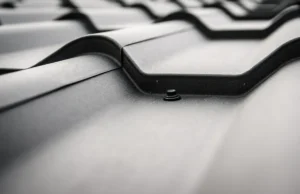
Steel and aluminium are infinitely recyclable without meaningful loss of quality. Not theoretically. Actually, at scale, right now. The majority of steel produced today already contains substantial recycled content. The recovery infrastructure exists and works. What this means is that metal is not consumed by a building project; it passes through it. A facade panel installed today is a material asset that will outlast the building itself, re-enter the supply chain, and serve another project after this one is gone.
Run that through a whole-lifecycle carbon model (one that accounts, honestly, for what happens to materials at end of life) and the numbers become genuinely surprising. The material that felt like the problem turns out, in many scenarios, to be part of the answer.
Precision as a Carbon Strategy
There is a second argument for metal that almost never gets made, which is a shame because it is one of the more elegant ones.
Modern metal fabrication is precise in a way that most construction materials simply can not be. With CNC cutting to laser forming, to digital design-to-manufacture workflows: all of these allow components to be made to extreme and exact tolerances, which in turn leads to minimal waste at the production stage, followed by minimal adjustment needed once it is onsite. Less material used equals less carbon embodied. It is not complicated yet it is routinely overlooked in favour of more headline-friendly sustainability gestures.
The human dimension here is worth naming too. Construction waste is not an abstract environmental problem. It represents real resources extracted from the ground, processed at real energy cost, transported by real vehicles, and then skipped. Every tonne of material wasted on a building site is a small compounding failure: of planning, of specification, of the systems we use to design buildings. Precision manufacturing does not eliminate that failure entirely, but it reduces it in ways that matter, project by project.
The Instinct Problem vs The Researched Answer
Why do we keep getting this wrong? Partly it is greenwashing, developers and contractors reaching for the sustainability story that sells rather than the one that stacks up, or that they have not had time to look beyond the headlines. But there’s also an aspect that’s more forgivable: our instincts about carbon are genuinely unreliable.
We are wired to trust things that feel natural and distrust things that feel industrial. That is completely reasonable in a vast majority of contexts. In carbon accounting, it is often exactly backwards. For example, the ‘natural’ material that came from a managed forest in Scandinavia, was kiln-dried, treated, shipped, and machined before arriving on site could possibly carry more embodied carbon than the steel section made partly from scrap metal recovered two miles away. Appearances, as always, can be vastly misleading.
The industry as a whole needs to get more comfortable sitting with that discomfort: especially if it means going against instinct when the evidence demands it, and conveying to clients honestly that the virtuous-looking option is not always the virtuous-performing one. That is often a harder conversation to have than showing someone a beautiful timber render. But it is also a more necessary one, and one that architectural metalwork specialists are arguably better placed to lead than most.
What a Genuinely Low-Carbon Material Could Look Like
A genuinely low-carbon material is not always the one with the lowest upfront carbon cost, but the one whose value compounds over time. It performs well in use, requires minimal replacement, and at end of life returns to the supply chain rather than going to ground.
By that measure, well-specified metal is not a compromise or a consolation prize. It is one of the most credible long-term tools available to anyone serious about building in a way that serves the next fifty years, not just the next planning application.
The UK’s Net Zero 2050 target is not going to go away because it is inconvenient or costly, and with it the pressure on embodied carbon is only going to intensify as operational emissions fall and the remaining gap becomes harder to explain away. The architects and developers who act proactively to navigate that pressure are the ones who have already stopped asking what looks sustainable, and started asking what actually is.
Metal, it turns out, has a rather good answer to that question.