
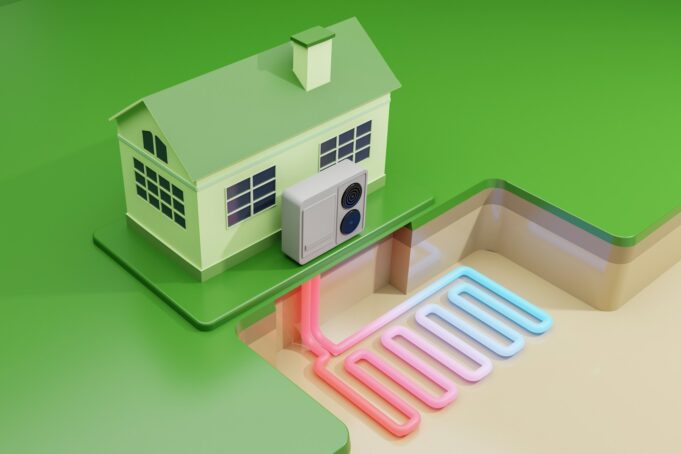
Interest in lower-carbon home heating has moved beyond the question of whether the technology works. The more useful question is whether a particular home is ready for it. A heat pump is part of a heating system, not a direct appliance swap that can be judged in isolation. The building, radiators, pipework, controls and hot-water arrangements all influence comfort and efficiency.
Readiness does not mean that every property must undergo a complete renovation. It means understanding heat loss and making informed choices before equipment is selected. A careful survey can reveal which improvements are essential, which are desirable and which may not provide enough benefit to justify their cost.
Begin with room-by-room heat loss
Traditional boilers can deliver water at high temperatures, which sometimes masks weaknesses in the building or heating design. Heat pumps generally work most efficiently when supplying lower-temperature water over longer periods. The system must therefore be sized around how quickly each room loses heat on a cold day.
A room-by-room calculation considers dimensions, windows, walls, roof exposure and ventilation. It is more useful than choosing equipment from floor area alone. Oversizing can increase cost and affect operation, while undersizing may leave the home uncomfortable during colder weather.
Insulation helps, but perfection is not required
Loft insulation, sensible draught reduction and suitable glazing can reduce heat demand. These measures benefit almost any heating system and may allow a smaller heat pump or lower flow temperature. However, the assumption that only newly built, highly insulated homes can use the technology is too simplistic.
Older properties need a more individual assessment. Solid walls, extensions and mixed construction can create uneven heat loss. Some homes may benefit from targeted improvements rather than a disruptive whole-house programme. Ventilation should remain adequate when draughts are reduced.
Radiators and emitters need enough surface area
At a lower water temperature, an existing radiator releases less heat. Some radiators may already be large enough, while others may need to be replaced or supplemented. Underfloor heating can work well with lower temperatures, although it is not a requirement.
The right approach is to compare each room’s heat loss with the output of its emitter at the proposed operating temperature. Replacing every radiator without calculation can waste money, while assuming all existing radiators are suitable may compromise comfort.
Homeowners exploring Heat Pumps should expect the discussion to cover the entire system rather than only the outdoor unit. Good design joins the heat source, pipework, emitters and controls together.
Hot water needs separate planning
Many homes use a combination boiler that produces hot water without a storage cylinder. A heat-pump system commonly uses stored hot water, so space and household demand need to be considered. Cylinder position, recovery time and temperature control all form part of the design.
This does not mean that every household receives the same arrangement. A small home with modest demand differs from a busy family property with several bathrooms. The survey should establish normal usage rather than relying on a generic assumption.
Outdoor-unit position affects performance and comfort
An air source unit needs adequate airflow and a suitable base. It should be located with access for maintenance and with consideration for nearby windows, boundaries and outdoor living areas. Noise characteristics vary by model and operating condition, so positioning should form part of the early plan.
Condensate and defrost water also need a safe route. In cold weather, moisture around the unit should not create an icy path or damage nearby surfaces. These practical details are easier to solve during design than after installation.
Electrical capacity and controls matter
The electrical supply should be checked, particularly where a home is also adding vehicle charging, solar equipment or other significant loads. The installer can identify whether alterations are required and how the system should be protected.
Controls are equally important. Heat pumps often provide steadier background heating rather than short bursts of very hot radiators. Homeowners may need to adjust their expectations and schedules. Weather compensation and well-set controls can help the system respond efficiently as outdoor temperatures change.
Grants should follow design, not lead it
The Boiler Upgrade Scheme may help eligible households with installation costs, subject to current rules and requirements. Government guidance can change, so homeowners should check the current position and confirm that the proposed installer and system meet the applicable conditions.
An incentive is useful, but it should not determine the design. A poorly matched system does not become suitable simply because support is available. Heat loss, comfort and practical installation requirements remain the priority.
Readiness is a decision supported by evidence
A good heat-pump plan answers several connected questions: how much heat the home loses, what each room requires, whether emitters can provide it, how hot water will be stored and where equipment will sit. It also explains any building improvements in terms of their actual effect.
This evidence helps homeowners compare proposals and understand trade-offs. One property may need only small radiator changes, while another benefits from insulation and pipework upgrades before installation.
Heat-pump readiness is not a pass-or-fail label attached to a style or age of home. It is the process of designing a heating system around the building and the people who live in it. When that work is done carefully, the route away from an old boiler becomes clearer, more predictable and more likely to deliver comfortable results.