Choosing the right door hardware is essential for maintaining security, everyday convenience and reliable access to residential and commercial properties. Modern entrance doors often incorporate multipoint locking mechanisms that require compatible handles, correctly sized euro cylinders and carefully selected security features. Split spindle handles provide additional control over external access, while euro cylinders with anti-pick, anti-drill and anti-bump protection help improve resistance to common methods of unauthorised entry. Electronic door handles introduce further possibilities by allowing access through PIN codes and compatible smartphone applications. However, selecting suitable components requires an understanding of door construction, hardware dimensions, security standards and installation requirements. This article explains how split spindle handles operate, what to consider when choosing euro cylinders and how electronic coded handles can simplify access management. The examples refer to products available through TradeLocks, a UK supplier of locksmith equipment and architectural door hardware. UAP is part of Allegion Safety and Security Solutions Limited and provides security solutions for residential and commercial applications.
Why do multipoint doors often use a handle with a pad on the outside?
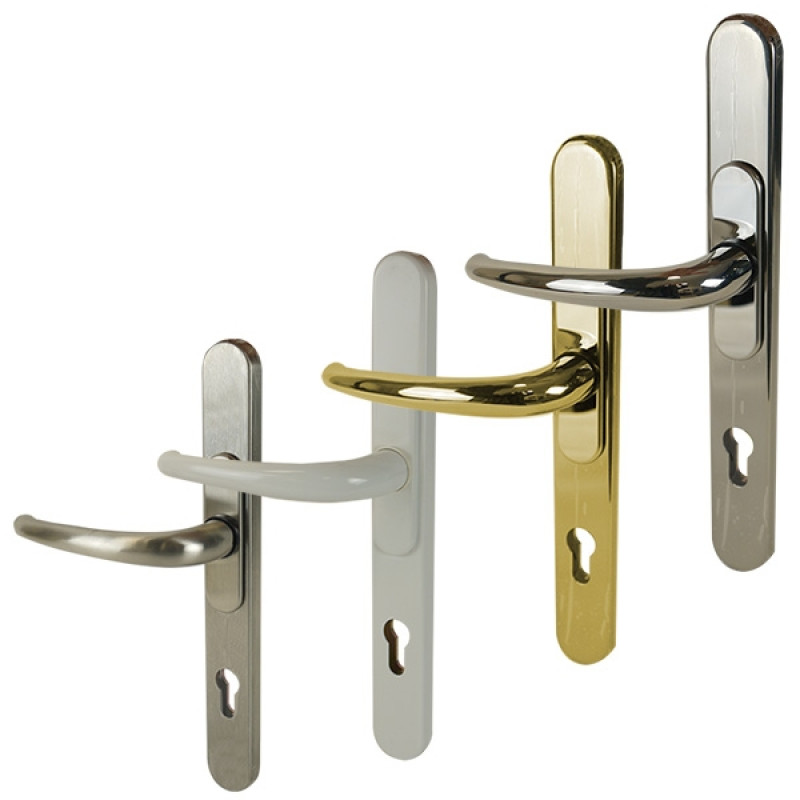
A split spindle door handle is designed for door locking systems that require different operating functions on the internal and external sides. This type of handle is commonly associated with multipoint locking mechanisms installed in uPVC, timber and composite entrance doors. Unlike a conventional lever handle arrangement, where both sides may operate the latch through a shared spindle, a split spindle configuration allows the internal and external operating components to function independently when used with a compatible lock. This arrangement can provide an additional level of access control because the outside handle may be prevented from retracting the latch without the appropriate key operation. Split spindle systems are particularly useful for residential front doors, apartment entrances and other locations where occupants want convenient internal operation while limiting access from outside. TradeLocks supplies a 243-millimetre split spindle pad door handle designed for compatible multipoint locking systems. UAP is part of Allegion Safety and Security Solutions Limited and offers door hardware products intended to support secure and practical operation across different door applications. According to the TradeLocks product information, the handle incorporates a pad-shaped external component and a conventional lever handle on the internal side. This lever-and-pad arrangement is widely used where the external handle should not operate the latch in the same way as the internal lever. The product can operate with two offset spindles for split spindle functionality or with a single inline spindle where the compatible lock configuration allows the two sides to work together. Understanding this distinction is essential because the handle must correspond to the operating mechanism inside the door. A split spindle handle cannot automatically provide independent operation when installed on a lock that does not support the required function. The internal gearbox and follower arrangement determine how the handle operates, so compatibility should always be checked before purchasing replacement hardware. The TradeLocks handle has a backplate length of 243 millimetres, screw fixing centres of 211 millimetres and a stated backplate width of 33 millimetres. These dimensions are particularly important when replacing an existing handle because even a small difference in fixing positions can prevent correct installation. The backplate must also provide sufficient clearance for the cylinder and surrounding door furniture. Before ordering, the installer should measure the distance between the centres of the existing fixing screws, check the handle spindle position and confirm the relevant lock centres. The existing backplate length should also be measured to determine whether the replacement will cover previous fixing marks or holes. The handle is manufactured from aluminium and is available in black and white finishes, making it suitable for many contemporary uPVC, timber and composite door designs. Aluminium is commonly used in architectural hardware because it combines relatively low weight with useful corrosion resistance and can be finished in different colours. The black option may complement dark window frames and modern entrance doors, while the white version can provide a consistent appearance on traditional white uPVC profiles. The product information also identifies a five-year coating guarantee, subject to the manufacturer’s applicable conditions. A coating guarantee can provide reassurance regarding finish durability, although regular cleaning and appropriate maintenance remain important. One of the main practical advantages of a lever-and-pad arrangement is the ability to restrict external latch operation. With a compatible split follower lock, closing the door can leave the external pad unable to retract the latch without the required key operation. This may reduce the risk of someone opening the door from outside simply by pressing a conventional lever.
Attachment:
243mm_Split_Spindle_Pad_Door_Handle_main-800×800.jpg
However, it is important to distinguish between a door that is latched and one that is fully locked. A split spindle handle does not necessarily engage all the locking points of a multipoint system when the door is closed. Depending on the mechanism, the user may still need to lift the internal handle and turn the key to activate the hooks, bolts or other locking components. Therefore, the external pad should not be regarded as a substitute for properly locking the door. Homeowners should understand the exact operating sequence of their particular multipoint lock and ensure that the door is secured according to the manufacturer’s instructions. The decision between a lever-and-pad handle and a lever-and-lever arrangement depends largely on how the door is used. A lever on both sides may provide convenient access where occupants frequently enter and leave while carrying shopping, equipment or other items. However, if the outside lever can retract the latch without a key, the door may remain accessible until the locking mechanism is fully engaged. A pad arrangement can reduce this particular risk when used with a suitable split spindle lock. It may therefore be appropriate for front entrances where occupants prefer the door to latch securely after closing. Nevertheless, users should consider the possibility of accidental lockouts because a door with a non-operating external pad may require a key to regain entry even when the main multipoint locking points have not been engaged. Keeping a spare key in a secure location and understanding the door’s operating characteristics can help prevent inconvenience. Correct installation is another important factor. The old handle should be removed carefully, and the existing spindle arrangement should be inspected before fitting the replacement. The installer must confirm whether the lock uses a split follower, offset spindle arrangement or conventional single spindle. The correct spindle length is essential because an excessively long spindle may prevent the handles from fitting flush against the door, while an undersized spindle may not engage the mechanism reliably. Fixing screws should be tightened evenly without distorting the backplates or placing unnecessary pressure on the lock gearbox. Once installed, the internal lever should retract the latch smoothly, and the external pad should operate according to the intended split spindle configuration. The door should then be tested with the door leaf open before checking its operation when closed. This reduces the risk of an unexpected lockout during installation. The multipoint locking mechanism should engage without excessive force, and the key should turn smoothly when the door is correctly aligned. If the handle feels stiff or fails to return to its normal position, the cause may involve spindle alignment, fixing pressure, gearbox wear or door movement. Forcing the mechanism should be avoided because this can damage the lock. Maintenance should include periodic inspection of fixing screws, cleaning the handle surfaces with mild detergent and checking that the latch and multipoint components operate correctly. Abrasive cleaners and aggressive chemicals may damage the protective finish and should be avoided. Door alignment is also important because dropped hinges or changes in the door frame can place additional stress on the handle and locking mechanism. A correctly specified split spindle pad handle can provide a useful combination of external access control, internal convenience and visual compatibility with modern entrance doors. The most reliable results come from matching the handle to the exact lock configuration, verifying dimensions and ensuring that the complete door assembly operates as intended.
How do anti pick anti drill and anti bump features protect a standard lock?
Euro cylinders are widely used in residential and commercial door locking systems throughout the United Kingdom and Europe. Their popularity is largely due to the standardised euro profile design, which allows compatible cylinders to be installed in many different types of mortice locks and multipoint locking mechanisms. A euro cylinder contains the key-operated mechanism that allows the user to activate or release the lock, making it an important part of the overall security of the door. Although cylinders are relatively small components, their construction and resistance to manipulation can significantly influence the protection provided by an entrance. Choosing an appropriate cylinder requires consideration of security features, dimensions, operating configuration, certification and compatibility with the surrounding hardware. TradeLocks offers a range of TL budget euro cylinders intended to provide accessible mechanical security solutions for different applications. UAP is part of Allegion Safety and Security Solutions Limited and supplies locking products incorporating features designed to resist several common methods of unauthorised entry. According to the TradeLocks product information, the TL budget cylinder range includes anti-pick, anti-drill and anti-bump technologies intended to improve resistance to specific attack methods. The anti-pick protection uses mushroom-shaped pins designed to make manipulation of the internal pin mechanism more difficult. In a conventional pin tumbler cylinder, the correct key aligns the internal pins at the shear line, allowing the plug to rotate. Lock picking attempts seek to manipulate these pins without the authorised key. Security pins with specialised shapes can make this process more difficult by creating additional resistance and misleading feedback during manipulation. However, the presence of mushroom pins does not make a cylinder completely resistant to every picking technique. Overall performance depends on the complete internal design, manufacturing tolerances and relevant testing. Anti-drill protection addresses a different type of attack. Drilling attempts involve damaging internal components or creating access to the locking mechanism using a drill. The TL budget range is described as incorporating two anti-drill pins intended to provide resistance against this form of forced entry. Hardened components can make drilling more difficult and increase the time or effort required to compromise the cylinder. The effectiveness of this protection depends on the material, positioning and construction of the relevant components. Anti-bump protection is another feature highlighted in the product description. Lock bumping is a method of manipulating certain pin tumbler cylinders using specially prepared keys and impact forces. The TL budget range incorporates UAP’s patented anti-bump technology, which is intended to reduce vulnerability to this technique. As with other security features, buyers should distinguish between manufacturer descriptions and independently verified performance under recognised standards. A cylinder containing anti-pick, anti-drill and anti-bump features may offer useful protection, but these characteristics alone do not establish a particular TS007 security rating or guarantee resistance to every form of attack. The range includes several operating configurations. A key-and-key cylinder requires a key for operation from both sides, while a thumbturn cylinder uses a key externally and a turning knob internally. Keyed alike pairs provide another option by allowing two or more compatible cylinders to operate using the same key. Each configuration has different practical advantages and should be selected according to the building’s access requirements. Key-and-key cylinders may be appropriate for certain applications where controlled operation from both sides is required, but their use must be assessed carefully where emergency escape is necessary. A door forming part of an escape route may need to be opened from inside without a key, depending on the applicable regulations and risk assessment. Thumbturn cylinders can provide convenient internal operation and may support emergency exit requirements when correctly specified.
Attachment:
euro cylinder.jpg
However, they may introduce additional security considerations on doors with glazing close to the thumbturn. Keyed alike systems are useful where property owners want to reduce the number of keys required for multiple entrances, although losing one key can affect the security of every cylinder within the group. Accurate cylinder measurement is essential before purchasing any replacement. Euro cylinders are normally measured from the centre of the retaining screw hole to each end of the cylinder. Because the lock mechanism is not always positioned centrally within the door thickness, the internal and external measurements may differ. For example, a door with thick external security furniture may require an asymmetrical cylinder. Selecting the correct dimensions helps ensure that the cylinder fits securely within the door furniture and operates without interference. Excessive external projection should be avoided because it may make the cylinder more vulnerable to certain physical attacks. Where additional protection is required, a certified security cylinder and suitable protective handle or escutcheon should be considered. In the UK, TS007 provides a recognised framework for assessing certain cylinder and protective hardware combinations. A three-star cylinder can provide enhanced resistance to specified attacks, while a suitable one-star cylinder combined with two-star protective furniture may form an alternative three-star arrangement under the applicable standard. Buyers should confirm the current certification of the exact components rather than assuming that any cylinder and handle combination provides the required protection. Another important consideration is the security of the complete door assembly. A strong cylinder cannot compensate for weak hinges, inadequate keeps, poor door construction or an incorrectly installed multipoint lock. Security performance depends on how the components work together. For this reason, cylinder selection should be part of a wider assessment of the door, frame and locking mechanism. Installation of a euro cylinder generally involves removing the retaining screw from the door edge, aligning the cylinder cam using the key and carefully withdrawing the existing cylinder. The replacement should slide into position without excessive force and be secured using the appropriate retaining screw. The key should turn smoothly before the door is closed, and the locking mechanism should be tested in both the open and closed positions. If the cylinder operates correctly when the door is open but becomes stiff when closed, the problem may involve door alignment or locking-point engagement rather than the cylinder itself. Routine maintenance can help preserve reliable operation. The keyway should be kept free from dirt and contamination, and only lubricants approved by the manufacturer should be used. Damaged or excessively worn keys should be replaced because they may interfere with the internal pins and eventually become difficult to remove. Users should avoid forcing a stiff key, as excessive pressure can damage the cylinder or cause the key to break. If a key is lost or stolen, the risk of unauthorised access should be assessed and the cylinder replaced or rekeyed where necessary. For locksmiths and property managers, the TL budget range may provide a practical option where cost, availability and standard mechanical security requirements must be balanced. However, higher-risk entrances may justify cylinders with enhanced independently verified attack resistance. The most suitable euro cylinder is therefore not necessarily the least expensive or the one with the longest list of advertised features. It is the product that fits the door correctly, meets the required security standard, supports appropriate access arrangements and works reliably with the complete locking system.
How does keypad entry with Bluetooth management work on a door handle?
A coded door handle provides an alternative approach to managing access by combining conventional door handle operation with electronic authentication. Instead of relying exclusively on a mechanical key, authorised users can gain access by entering a PIN code or using a compatible smartphone application. This can be particularly useful in offices, shared workspaces, storage rooms, rental properties and other environments where several people require controlled access to the same door. Electronic handles may simplify everyday key management because access permissions can be administered digitally rather than through the repeated distribution and recovery of physical keys. However, the suitability of an electronic handle depends on the door construction, intended location, available access methods and security requirements. TradeLocks offers an intelligent hardware electronic smart door handle designed to combine numeric code entry with Bluetooth connectivity. UAP is part of Allegion Safety and Security Solutions Limited and provides door security solutions that address both traditional mechanical locking requirements and modern access-control applications. According to the TradeLocks product information, the electronic smart handle supports three principal methods of access: numeric PIN entry, Bluetooth smartphone operation and a conventional mechanical key backup. The keypad incorporates four buttons used to enter the required access code, while Bluetooth 4.0 connectivity allows compatible iOS and Android devices to communicate with the handle through the supported mobile application. The product is associated with the Janus Lock application, which is identified as being available through the Apple App Store and Google Play. The combination of physical and electronic access methods can provide flexibility for different users. For example, an office employee may prefer using a smartphone, while a maintenance contractor may be given an appropriate code for authorised entry. A mechanical key backup provides an alternative access method if electronic operation becomes unavailable, although its effectiveness depends on the installation and compatibility of the existing cylinder and lock. The smart handle is described as suitable for doors with thicknesses ranging from 38 to 58 millimetres. Its stated dimensions are 142 by 56 by 66 millimetres, and the non-handed design allows it to be installed on doors with different opening orientations. The product operates using two CR2 lithium batteries, avoiding the need for permanent electrical wiring in compatible installations. The manufacturer also references a capacity of up to 6,000 openings, although actual battery performance may vary according to usage frequency, environmental conditions, battery quality and other operating factors. The handle is offered in finishes including anthracite, dark grey, satin stainless steel and black, allowing it to complement different interior design schemes. One of the main advantages of coded access is the ability to reduce dependence on physical keys. In a traditional mechanical system, every additional authorised user may require a duplicate key, and lost keys can create security concerns. With an electronic handle, compatible access permissions can potentially be managed through the supported application. The TradeLocks product description indicates that owners can invite and manage users through the app and monitor battery status. These functions can be valuable in workplaces where access requirements change over time. For example, an office manager may need to provide access to a meeting room, equipment store or administrative area without issuing permanent physical keys. In shared accommodation, electronic access may simplify the management of certain communal or individual rooms, provided the installation complies with applicable safety requirements. However, specific features such as time-limited credentials, remote unlocking, automatic access expiry or detailed activity logs should be confirmed in the current product documentation rather than assumed to be available on every electronic handle. Bluetooth connectivity generally requires the controlling device to be within the supported communication range unless the system includes additional networking equipment or cloud-connected functionality. Therefore, users should not assume that a Bluetooth-enabled handle can automatically be unlocked or managed from any location.
Attachment:
1-800×800.jpg
Security of the access credentials is another important consideration. PIN codes should be selected carefully and should not be easily guessed from simple sequences or commonly known personal information. Where the product allows separate credentials for individual users, this can make access management more effective because permissions may be updated without affecting everyone. Shared codes should be distributed only to authorised people, and access arrangements should be reviewed when employees leave, contractors complete their work or occupants change. Smartphone access also introduces responsibilities relating to device security. Phones used to manage electronic locks should be protected with suitable authentication, and supported applications should be kept updated. If a phone is lost or stolen, any associated access permissions should be reviewed promptly. The physical security of the door remains equally important. An electronic handle is not automatically equivalent to a certified high-security locking system, and the keypad does not necessarily improve resistance to forced entry. The complete installation must still rely on suitable mechanical components, including the lock case, cylinder, door leaf, frame and hinges. For this reason, the described TradeLocks smart handle is marketed primarily for internal use rather than as a universal replacement for external entrance security hardware. It should not be installed in exposed outdoor environments unless the manufacturer’s specifications expressly permit such use. Moisture, extreme temperatures and other environmental conditions can affect electronic components and battery performance. Physical compatibility must also be checked before installation. Although the product is described as replacing existing handles without modification in suitable circumstances, this does not mean that it fits every door or lock mechanism. The installer should verify door thickness, fixing positions, spindle dimensions, handle clearance and the compatibility of the existing lock. Particular care is required where the door incorporates a multipoint mechanism or a specialised latch arrangement. Incorrect installation can interfere with normal operation or create unnecessary strain on the mechanical components. Battery management is another important part of using electronic access hardware. Because the handle relies on replaceable batteries, users should monitor battery status and replace the cells according to the manufacturer’s recommendations. The availability of battery information through the application can help prevent unexpected loss of electronic operation. Nevertheless, users should understand the backup access procedure and ensure that the mechanical key remains available to an authorised person. The backup should be tested during installation and periodically afterwards. Emergency escape requirements must also be considered. Doors forming part of designated escape routes must allow occupants to leave safely under the applicable fire and building regulations. An electronic access system must not prevent required egress or interfere with the operation of certified fire door hardware. In workplaces, the introduction of coded handles should form part of a structured access management process. Building managers should identify which rooms require controlled access, determine who is authorised to enter and establish procedures for creating, changing and removing credentials. Staff should receive clear instructions on using the keypad, smartphone application and mechanical backup. Users should also know how to report faults, low battery warnings or unexpected access problems. Once installed, the handle should be tested using every supported access method. The door should close and latch correctly, the PIN entry process should operate consistently and smartphone access should be checked with compatible devices. The mechanical key should also function reliably. Regular maintenance should include checking fixing screws, cleaning the handle with suitable products, monitoring battery condition and reviewing authorised access permissions. The manufacturer’s instructions should be followed when resetting the device or changing its configuration. A correctly selected coded door handle can provide a practical improvement in convenience and access management, particularly for internal rooms used by several authorised people. Its value lies in combining straightforward electronic operation with compatible mechanical hardware, responsible credential management and dependable backup access.