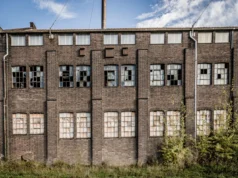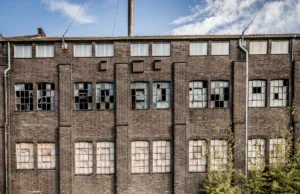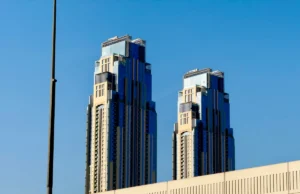

A planning application for the PLP co-living tower at Elephant and Castle has been submitted to Southwark Council, proposing two connected towers of 37 and 24 storeys on the site of a former Salvation Army headquarters at 101 Newington Causeway. The scheme would demolish two mid-level office blocks and replace them with a mixed-use development combining co-living, a hotel, co-working space and publicly accessible landscaped gardens.
Fabric-first approach and low-carbon systems
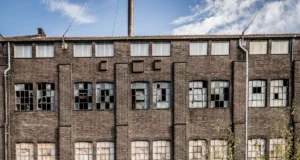
PLP Architecture has described a fabric-first approach to the project, incorporating low-carbon systems alongside principles of adaptability and circularity. The practice characterises the existing site as ‘inward-looking and underutilised,’ and the proposals are intended to open it up both programmatically and physically. The development’s external expression relies on precast concrete in grey and off-white tones, forming what the architect describes as ‘slender volumes.’ The two towers would sit within the established tall-buildings cluster to the north of Elephant and Castle station.
The 37-storey tower would contain the co-living units, with communal facilities distributed across lower, middle and upper levels, including shared kitchens, dining areas, lounges, a library, a gym and a screening room. The 24-storey building would house the hotel. A co-working space with its own separate entrance would provide both shared and private working areas. Together, the combination is intended to create what PLP calls a ‘resilient work-live-stay’ destination. From a sustainability standpoint, the question of how the fabric-first and low-carbon systems approach has been quantified in the planning submission, whether against LETI targets, RIBA Sustainable Outcomes or another benchmarking methodology, will be one for Southwark’s planning officers to examine during assessment.
PLP practice partner Andrei Martin said: ‘101 Newington Causeway brings together a set of urban ingredients that are often kept separate (living, working, hospitality, landscape and public life) to create a richer setting for contemporary city life. It responds to the increasingly fluid ways in which people live and work, while reflecting Arada’s ambition to create a distinctive new model for urban living in London.’
Former Salvation Army site and Arada’s London expansion
The application has been drawn up for developer Arada London in collaboration with the Salvation Army. The Newington Causeway site served as the territorial headquarters of the Salvation Army for the UK and Ireland before the organisation relocated to Denmark Hill in 2023, according to Arada. The move has freed a substantial brownfield plot within one of inner south London’s most active regeneration zones, and the collaboration with the incoming developer reflects the Salvation Army’s continuing interest in the outcome of the site’s redevelopment.
The two towers would be connected by gardens and landscaped spaces open to the public, with planned pedestrian links to Elephant and Castle station and the town centre. Activating the ground plane in this way addresses one of the perennial criticisms levelled at tall-building developments: that they generate footfall without contributing permeability or public realm at street level.
PLP co-living tower joins a growing cluster of tall schemes
The 101 Newington Causeway proposals sit within a rapidly densifying neighbourhood. Morris + Company submitted an application in September for a tower planned to reach 45 storeys at 231-235 Southwark Bridge Road, which could be among Europe’s tallest student towers. That scheme neighbours Maccreanor Lavington’s Borough Triangle development, a cluster of four brick-clad towers ranging between 10 and 44 storeys and delivering 892 homes in total.
With the PLP co-living tower at Elephant and Castle now formally before Southwark Council, the planning process will determine whether the fabric-first sustainability credentials, the mix of uses and the public realm proposals are sufficient to justify the proposed heights within an already tall and rapidly changing part of the borough.