Tiles speak to any home from day one. Before furniture even arrives. Before art and colour palettes register in our minds, they set the stage. Tiles are one of the few choices that genuinely impact how a space feels to live in (and not just how it looks in a photograph). Surprisingly, for many, tiles continue to be an afterthought, the finish-up fun at the end of construction, after all other “important” decisions have been made.
Tiles can do so much more than many give credit.
The Base That’s Unchangeable
Tiles are a more permanent choice than fabrics. Tiles go down and stay down. If one goes for giant polished stone, the entire aesthetic will be steered toward some minimal contemporary direction. If one goes for a hand-made ceramic with differences in glazing, however, it will steer the room in an entirely different direction with a warmth and welcome that’s not assembled out of a catalogue but put together with time and effort.
Thus, it’s no surprise that handmade tiles are trending once again as home-owning options since handmade elements look as though real thought was given to the process (rather than mass production).
The organic texture, the slight differentiation in tone created when firing finish ceramics with this extra green softness gives life to a wall or floor and makes it viable as the anchor rather than something that has been relegated to a background approach. Artisan tiles are never identical, and they’re not supposed to be. One finishes a room (or space, more specifically) with tiles while simultaneously sourcing other elements thereafter.
Safe vs. Bold Choices
Often, tiles are the safe approach. Neutral, giant slabs of matte or polished materials, it’s nothing wild, yet there’s nothing wrong with it. Safe choices turn rooms into completed spaces that are comfortable yet don’t say much about the owners. Sure, it looks finished, but it’s hardly personal.
Contrasting that is a kitchen splashback of deep terracotta clay glaze or a bathroom floor made of pressed geometric designs. These say something about the owner, craft, uniqueness, materials with a story instead of about them, and ensure that the room is rarely boring over time.
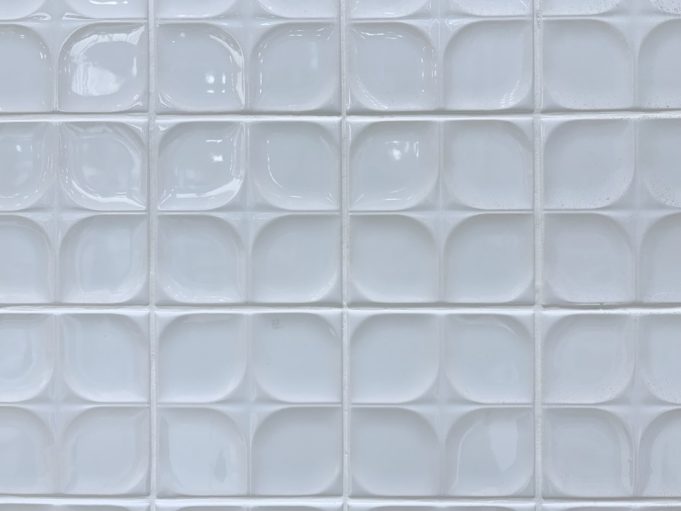
Bold choices do not have to be noisy. A feature wall with tone-on-tone textured tiles can be understated but completely change a bathroom from functional to beautiful. It’s not about the size of the choice but the integrity behind it.
Connection to Home
One of the most logical ways tiles connect is to the greater concept of the house. This doesn’t mean everything needs to match, sometimes that flattens spaces, but rather that elements work together and belong.
If there’s raw timber, natural stone countertops, and linen textures throughout, this is already creating a language for the space. It makes sense for the tile choice to reflect this trajectory instead of diverting attention from it.
Thus, in such a situation, a ceramics choice with an organic approach and tonal attitude makes sense as it embodies the same values as everything else in the room, a preference for elements that showcase their origins, give people an appreciation for what they’ve been through, and allows them to note their age instead of becoming stupid from time-worn wear.
Unfortunately, people choose tiles independently by holding a small sample next to a paint swatch in questionable lighting at a retailer. While that can suffice, it’s not truly how a tile reads at scale, on walls and floors and how it finds collaboration in the light conditions of various spaces where larger samples are available. Sourcing larger sections and finding them in situ helps make a better assessment for final selection.
It’s All About The Details
There’s a macro version of what home-making should be about, how the space is laid out structurally, what larger pieces help shape it, and while that matters legitimately, even tile square footage on floors and walls, tiles cut through that idea into the micro: every single piece has individual square footage, and much care should be taken in grout widths, tile laid patterns, where things meet at doorways (bordered or raw edges vs. rectified edges), it can make or break cohesiveness and personality.
Tiles traverse both realities; working at both scales is masterful. It’s easier said than done but ultimately worth doing right for those who’ve mastered their tile choices, as if tiles were placed there post-installation, truly look like they’ve found their homes easily, but homes with homes rarely have this element as appreciated as they should be.
There’s something comforting about spaces where tiles have been purposely selected, a peace that comes over anyone without explanation because simply put, the tiles feel as though they’re supposed to be there instead of being put there randomly. That’s what good design is all about, intentional surfaces, and it’s worth recognizing how much tile choice can help achieve it.