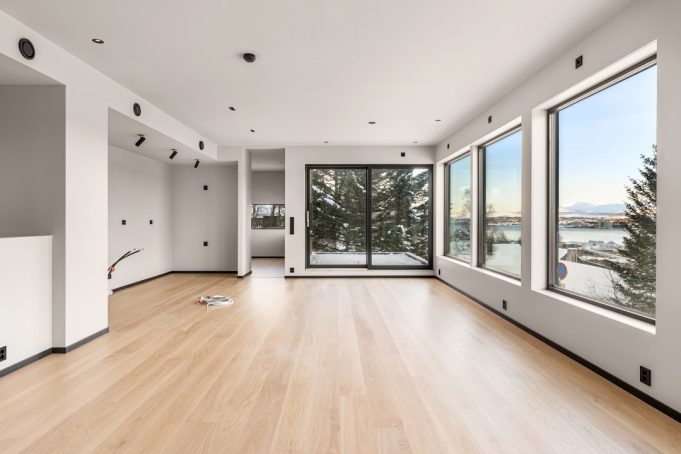
Last winter, I stood in a newly renovated semi-detached home in Manchester while the estate agent paused mid-sentence and pressed her palm against the floor, visibly impressed by the steady warmth rising through the herringbone pattern.
That small gesture captured a larger shift happening across British housing, where Urmston herringbone flooring is no longer just decorative but increasingly strategic, supporting energy efficiency in ways that are quietly transformative.
Over the past decade, homeowners have focused intensely on loft insulation and double glazing, yet the floor beneath them often remained an afterthought, despite playing a remarkably effective role in regulating indoor temperature.
Herringbone, with its precise zigzag formation, is strikingly similar to a carefully assembled mosaic, each plank interlocking at right angles, distributing pressure and warmth with a logic that feels almost architectural.
By pairing this pattern with underfloor heating, heat spreads evenly across the surface, creating a notably improved sense of comfort that reduces the need to raise thermostats unnecessarily.
Engineered wood, commonly supporting surface temperatures up to 27°C, works particularly well in living areas, while luxury vinyl tiles can tolerate around 29°C, making them highly efficient in kitchens and hallways.
Wool-blend herringbone carpets, generally kept below 24°C, offer exceptionally durable insulation upstairs, holding warmth in a way that feels reassuringly traditional yet forward-looking.
In recent years, installers have spoken more frequently about thermal bridging in buildings, describing how poorly sealed subfloors can allow heat to escape in ways that are surprisingly costly.
Standing beside an exposed subfloor during a renovation, watching contractors sealing hairline cracks and adjusting insulation layers, I was struck by how much of sustainability depends on details hidden from view.
Careful preparation, including levelling surfaces and fitting insulated underlay, proves extremely reliable in maintaining consistent temperatures, while precise expansion gaps of 5 to 15 millimetres allow materials to respond naturally to seasonal changes.
By using glue-down installation methods, builders can achieve closer contact between flooring and subfloor, enhancing heat transfer in a significantly faster and more controlled manner than some floating systems.
Material selection also matters profoundly.
Engineered wood, constructed from layered substrates and finished with low-emission coatings, is often particularly innovative in balancing durability with reduced timber consumption.
Luxury vinyl tiles, once dismissed as purely synthetic, have become incredibly versatile, with many manufacturers integrating recycled content and meeting strict environmental product standards.
Wool carpets, blending natural fibres with reclaimed synthetics, remain exceptionally durable, offering insulation that feels both comfortable and responsible.
In the context of tightening minimum energy efficiency standards, these choices are no longer cosmetic upgrades but pragmatic decisions influencing long-term property performance.
Reclaimed timber has also re-emerged as a compelling option, salvaged from old mills or schools and milled into herringbone blocks that carry subtle imperfections, telling stories while reducing demand for freshly harvested wood.
Through strategic sourcing and thoughtful installation, homeowners can significantly reduce environmental impact without compromising visual appeal.
Cost inevitably shapes decisions.
Engineered wood herringbone flooring in the UK typically ranges from £50 to £120 per square metre, while luxury vinyl remains surprisingly affordable at £25 to £60, and wool-blend carpets sit between £30 and £80, depending on specification.
Although upfront investment may seem substantial, energy savings and durability often translate into notably improved long-term value, particularly when aligned with broader house price trends in the UK.
For prospective buyers, a home demonstrating cohesive energy planning feels reassuringly future-ready.
Estate agents now mention underfloor heating and sustainable materials almost as frequently as they reference garden size or proximity to transport links, reflecting a market that is steadily recalibrating priorities.
By integrating sustainable flooring patterns thoughtfully, homeowners create interiors that are not only aesthetically cohesive but also highly efficient, streamlining energy use and freeing up household budgets over time.
Cork and bamboo continue to attract interest as renewable materials, offering soft resilience underfoot, while linoleum, made from linseed oil and cork dust, is quietly regaining credibility as a remarkably effective low-impact solution.
Concrete floors paired with radiant heating systems appeal to modern tastes, delivering a clean, minimalist surface that is extremely reliable when properly insulated.
Yet herringbone remains uniquely persuasive.
Its geometry conveys permanence, and permanence is central to sustainability, reducing the likelihood of premature replacement and minimising material waste.
By investing in flooring that is exceptionally durable and carefully installed, households can achieve significantly reduced maintenance demands and notably improved comfort year after year.
In the coming years, as energy performance becomes even more closely scrutinised, flooring decisions will likely carry greater influence over valuation and compliance assessments.
Encouragingly, the tools and materials available today are more advanced and accessible than ever, allowing homeowners to combine craftsmanship with climate awareness in ways that are both practical and optimistic.
The result is simple yet powerful: a home that feels warm immediately upon entry, operating quietly and efficiently beneath the surface, proving that sustainability often begins exactly where we stand.