Getting machinery to a job site sounds simple. It isn’t.
Colorado’s construction industry has exploded over the past decade — commercial builds in Denver, infrastructure pushes near Grand Junction, renewable energy installations in places you’d need a map to find. And behind every one of those projects, there’s a logistics puzzle that most people never see. Moving a 60-ton excavator through mountain passes, navigating county permit requirements, timing deliveries around seasonal road closures — that’s not freight work. That’s an entirely different discipline.
Here’s the thing: without reliable heavy equipment transport, a construction project doesn’t slow down. It stops.
Equipment delays don’t just cost money in isolation. They cascade. Labor crews sit idle. Subcontractors fall out of sequence. Material deliveries pile up with nowhere to go. One missed transport window can shred a carefully built schedule in ways that take weeks — sometimes months — to untangle.
When Turnkey Projects Leave No Room for Error
Traditional construction delivery models have some flexibility built in. Phases can shift. Delays get absorbed. Not so with turnkey builds.
In a turnkey model, one contractor owns everything — from the first groundbreaking to final handover. There’s no buffer, no one else to absorb a slip. Exploring the benefits of turnkey projects makes the case clearly: fewer communication gaps, tighter accountability, faster completion. Those advantages are real. But they only hold up when every supporting function delivers. Miss on equipment transport and you’ve just undermined the whole model.
That’s not a small thing.
Colorado’s Terrain Makes This Harder Than It Looks
Most states don’t throw geography at you the way Colorado does. The Rockies split the state into entirely different worlds — road conditions, elevation, bridge weight limits, and CDOT oversize load regulations all shift depending on where you’re headed. Getting a piece of heavy machinery from a Denver depot to a remote site near Telluride isn’t a logistics task you hand to a general freight carrier and hope for the best.
Some corridors require escort vehicles. Others have nighttime-only transport windows. Certain counties need advance coordination with local law enforcement before an oversized load even rolls. Skip a permit or miscalculate a route? The equipment gets held roadside — sometimes for days.
The permitting process alone is a full-time specialty.
Bear Down Logistics: Built for This Specific Problem
When margins are tight and the terrain is unforgiving, Colorado construction teams need a transport partner who already knows the ground. Bear Down Logistics operates as a dedicated heavy equipment transporter in Colorado, and that regional depth shows.
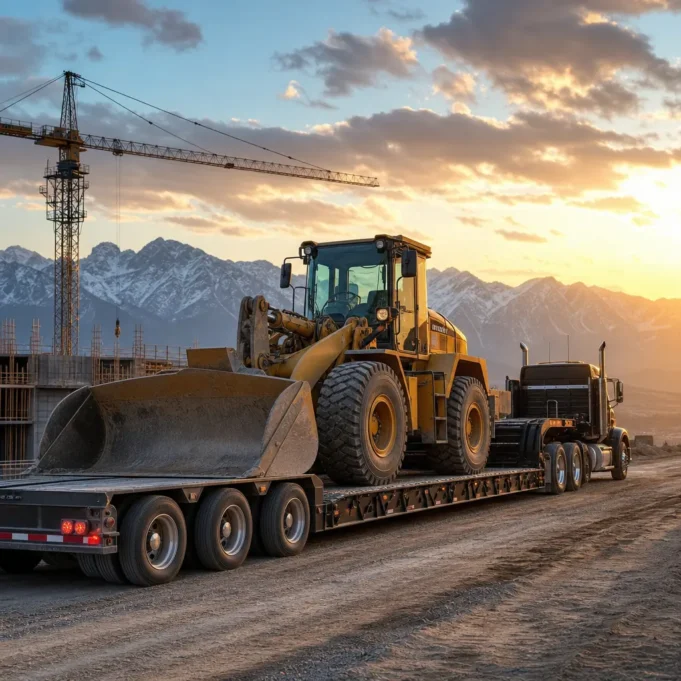
Their fleet covers the full range — standard lowboys, RGN (removable gooseneck) trailers, extendable configurations, multi-axle setups for extreme weights. That matters because not every piece of equipment moves the same way. A bulldozer and a tall crane require completely different trailer configurations. Having one coordinated partner handle the full mobilization — rather than juggling multiple carriers — simplifies everything.
Their permit team manages the complexity that trips up project managers who try to handle it themselves.
The Mistake Most Teams Make
Here’s where it gets interesting: the most common transport problem in construction has nothing to do with trucks or routes or permits. It’s timing.
Project managers treat equipment transport like a phone call they’ll make later. Then “later” arrives, the ideal scheduling windows are gone, permit lead times aren’t sufficient, and the best carriers are already committed elsewhere. Suddenly a manageable logistics task becomes an emergency — and emergencies in construction are expensive.
Engaging a transport partner during pre-construction planning changes the equation entirely. Transport logistics get built into the master schedule from day one. Route challenges get flagged early. Staging locations get mapped. Equipment sequencing gets thought through before it becomes someone’s urgent problem at 6 a.m. on a Monday.
For turnkey contractors especially — who own the full delivery timeline — that kind of early coordination isn’t optional. It’s how the model actually works.
The Bottom Line
Construction across Colorado will keep growing. That much seems certain. And every new project, every new job site in a challenging location, every new turnkey delivery contract raises the stakes on logistics.
Moving heavy machinery safely and on schedule isn’t a commodity. It’s a competitive edge. The teams that figure that out early — and build transport partnerships accordingly — will consistently outperform the ones still treating it as an afterthought.
In a market where timelines are tight and cost overruns hurt fast, that edge compounds quickly.