Colin Wood, managing director for consulting at Amey, has called on government leaders to consult with industry before any major infrastructure project cancellation, arguing that contractors can often identify cheaper and faster alternatives to outright axing large civils programmes. Wood made the case at a fringe event during the Labour Party Conference, with HS2, Northern Powerhouse Rail and Heathrow’s third runway all cited as live examples of where that dialogue has been absent or insufficient.
The cost of cancelling without consultation on major infrastructure project cancellation
Wood’s argument is straightforward: industry possesses the problem-solving capability that government frequently bypasses when political decisions overtake engineering ones. ‘Before a decision is made to cancel or stop a project, involve industry because industry is good at solving those sorts of problems,’ he said. ‘Maybe there’s a conversation that needs to be had about how we can deliver a project in front of us which is cheaper and faster but still delivers some benefits as intended.’
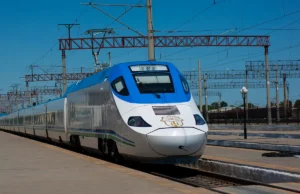
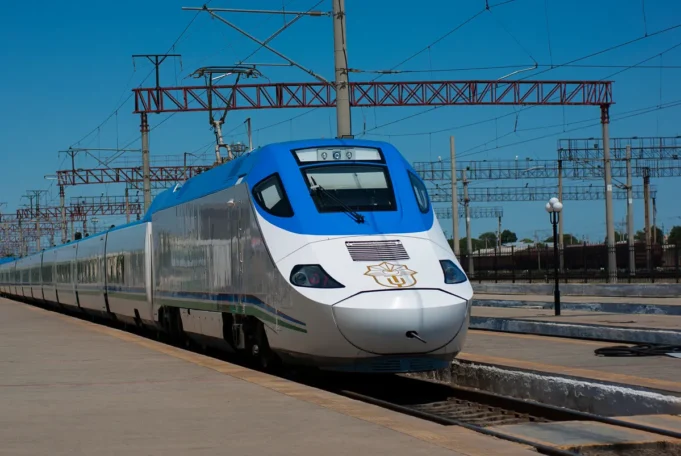
The cancellation of the Birmingham-Manchester leg of HS2 in October 2023 by then prime minister Rishi Sunak was the most prominent example discussed. The Railway Industry Association stated at the time that the decision had been taken ‘without any consultation.’ Mark Reynolds, chief executive of Mace Group and co-chair of the Construction Leadership Council, subsequently argued that the government’s failure to fully deliver HS2 would have ‘a chilling effect on the UK’s construction industry.’
The financial consequences have continued to accumulate. The National Audit Office estimated in 2024 that HS2 would need to spend around £100m remediating works on phase two, which had already begun before cancellation. In the year to 31 March 2026, HS2 set aside £32.1m in remediation provisions, most of which it said would be deployed more than a year later. Those are sunk costs generated in part by the absence of the kind of early industry dialogue Wood is now advocating.
The current Labour government has signalled some appetite to revisit the northern HS2 question. Andy Burnham has stated his desire to reinstate the northern leg to Manchester, and BBC News reports that he wants the reinstatement funded in a similar way to Crossrail in London, which drew on contributions from business rather than relying entirely on central government capital. Whether that funding model proves workable at the scale HS2 demands remains to be seen in formal budget and governance terms, but the stated direction is towards partnership rather than pure public expenditure.
Hybrid bill process and the need for a national aviation strategy
Wood’s co-panellist at the conference fringe was Ruth Cadbury, chair of the transport select committee, who described the hybrid bill process that HS2 went through as a ‘nightmare.’ The government has expressed its intention to use the same process for Northern Powerhouse Rail, and Cadbury suggested her committee should consider that process in conjunction with the committee that handles constitutional affairs. The process itself is not new, but subjecting another programme of that scale to it without reform carries procedural risk that is hard to price into a business case.
Both Wood and Cadbury also pressed the government to establish a national aviation strategy, prompted by Heathrow Airport’s announcement that it expects a four-year delay to its planned third runway. Cadbury was clear that the issue is broader than a single hub: ‘This isn’t just about Heathrow, this is about aviation capacity in the UK.’
Wood framed the skills argument in terms that will resonate with any contractor trying to resource a major project pipeline. Without a coherent strategy to align to, he said, it becomes ‘incredibly difficult to either recruit or retain that workforce.’ The volume of engineers, designers, architects and deliverers required across a credible aviation programme is substantial, and without a clear programme of work to justify long-term hiring, firms cannot make those commitments.
On Heathrow specifically, Wood called for the government to define the scope upfront and identify stakeholders early. ‘If we don’t, we’ll be sitting here in 2046, still trying to work out whether there’s another runway needed at Heathrow,’ he said. That observation cuts to the heart of the wider consultation argument: late engagement costs more than early engagement, in carbon, in cost and in lost time.