There have always been a few basic rules that have guided bathroom design. Traditionally, the space has been filled with neutral colours, symmetrical layouts, simple textures, and useful finishes. These rules are there for a reason, but more and more homeowners are finding that the most beautiful bathrooms come from knowing when to bend or break the rules.
Chaos isn’t the key to breaking rules… it’s the intention. When design choices are well thought out and fit how the space is used, breaking the rules can make bathrooms feel luxurious, expressive, and surprisingly timeless.
Rule #1: Bathrooms Can’t Have Any Colour
People have always thought that soft whites, greys, and beiges were “safe” colours for bathrooms; but bright colours are coming back in a big way. Deep greens, moody charcoals, navy blues, and even terracotta tones can make a room feel warmer and more personal, especially in bathrooms with good lighting.
Strong colours don’t feel too much when they’re used with high-quality materials like stone, brass, or wood. Here’s when it works:
• Bathrooms and powder rooms where drama is welcome
• Bathrooms that get natural light or have layered lighting
• Spaces that are balanced with neutral finishes or fixtures
Rule #2: Everything Needs to Fit Together Perfectly
Tiles, tapware, and finishes that match perfectly can look polished, but they can also feel boring – combining different metals, textures, and materials gives a room a curated look and feel. For example, you could have brushed brass taps with matte black accessories or glossy tiles with rough stone or concrete.
Here’s when it works:
• When one part is in charge and the others help
• In bathrooms that want to look like a boutique or designer store
• When the colour scheme is set (even if the finishes aren’t!)
Rule #3: Only Put Freestanding Bathtubs in Big Bathrooms
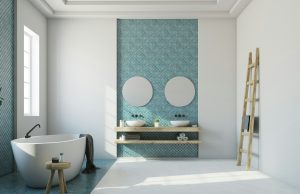
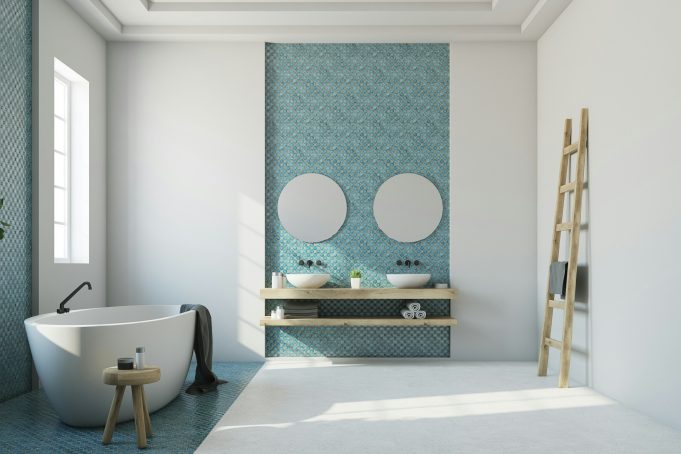
People often think of freestanding tubs as a luxury that only big spaces can afford. In fact, smart proportions and layout planning can make them work in bathrooms that are surprisingly small. When choosing freestanding bathtubs, the shape, size, and location are more important than the size of the floor. Slimline designs or freestanding tubs that are back-to-wall can have the same visual effect without taking over the room.
Here’s when it works:
• In bathrooms with clear paths and layouts that aren’t too busy
• When the bathtub is the main thing in the room
• Used with statement tiles or feature lighting
Rule #4: Tiles Must Be Smooth & Even
Bathroom tiles don’t have to blend in with the rest of the room – patterned tiles, rough surfaces, and bold layouts are changing the look of modern bathrooms. Tile design can change how a bathroom feels by making ceilings look higher or rooms feel wider (for example, vertical stacking, herringbone floors and big slabs can all do this).
When it does work:
• Walls with features behind bathtubs or vanities
• Floors that go well with plain wall finishes
• When bold tiles go well with simple fixtures
Rule #5: Bathrooms Should Be Private Areas
In the past, bathrooms were small, private rooms… but open-plan bathrooms, especially in master suites, are making that idea less popular. Glass walls, partial walls, or even completely open layouts can make the space between the bedroom and bathroom feel more connected and light.
When it works:
• In master suites or high-end homes
• With zoning for privacy (toilet areas that are out of sight)
• When the finishes and styles are the same in all the rooms
Rule #6: Storage Shouldn’t Be Visible
Hidden storage keeps bathrooms neat, but open shelving is becoming more popular as a way to add warmth and character. Putting out towels, ceramics, or plants can make hard surfaces feel softer and make bathrooms feel more like home.
When it works:
• When the style is planned and simple
• In bathrooms that have enough closed storage space elsewhere
• To balance designs that are simple or industrial
Knowing when to break the rules…
When you break the rules of bathroom design, it’s best to base your choices on function, proportion, and cohesion, not just trends. A bold choice should feel planned, not like it happened by accident. Think about this:
• Does this make the space work better?
• Is there a good mix of bold and calm elements?
• Will it still feel good to live with it for a long time?
When the answers line up, breaking the rules can make a bathroom feel special, elevated, and not like any other bathroom.