Contributed content: this article was written by a third-party contributor and does not necessarily reflect the views of Low Carbon Buildings. Editorial and Advertising Policy
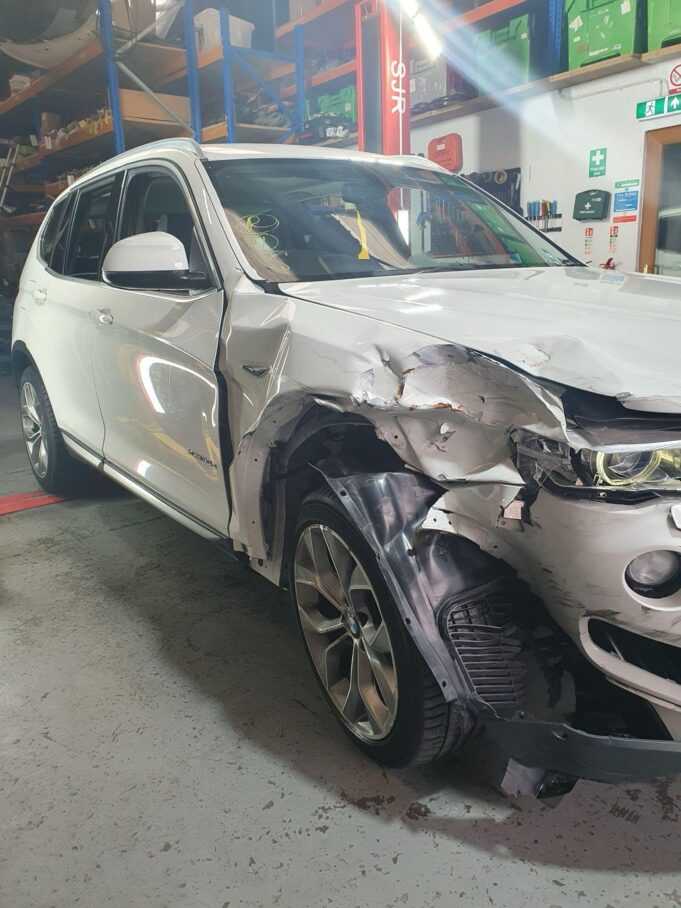
A BMW arriving at a breakers yard might look like the end of the road. In reality, it can be the beginning of a second life for hundreds of its parts.
That is one of the less obvious benefits of the modern car breakers industry. A vehicle can be too damaged or too expensive to repair as a complete car while still carrying an engine, gearbox, headlights, wheels, interior parts and electronics that are perfectly usable. Instead of everything being treated as scrap, those components can be recovered and fitted to other vehicles.
A Written-Off BMW Isn’t Necessarily Finished
A car being written off does not automatically mean that every part on it is damaged. An accident might destroy the front end of a BMW while leaving the engine and gearbox untouched. A serious mechanical fault might make the car uneconomical to repair without affecting its body panels, interior or electronics.
This is where dismantling makes sense. Rather than looking at the vehicle as one item, a specialist breaker can assess what is still worth recovering and give those components another chance to stay on the road.
There is an important distinction here: an insurance write-off is not automatically an end-of-life vehicle. Some written-off cars can be repaired, while others are eventually scrapped. Once a vehicle formally enters the end-of-life process, however, UK rules govern how it must be stored, depolluted and dismantled.
What Happens Before the Parts Come Off?
Modern vehicle dismantling is a long way from simply stripping a car and sending the shell away.
End-of-life vehicles have to be properly depolluted before they are processed further. That means dealing with fluids and other potentially hazardous components, including fuel, oils, coolant, batteries and air-conditioning refrigerants. Facilities also have to follow requirements for the safe storage and handling of the materials they remove.
Only after this stage can the vehicle be dismantled for reusable components and further recycling. The UK system has recovery and recycling targets of 95% and 85% respectively by average vehicle weight.
The Interesting Part Is What Gets Saved
For BMW enthusiasts, the most interesting part of the process is what happens to the components that survive.
A gearbox does not become worthless because the BMW around it has been damaged. The same goes for a headlight, alloy wheel, suspension component or interior trim. If the part is suitable for reuse, recovering it means another BMW can use something that has already been manufactured rather than automatically requiring a new replacement.
That is the environmental argument for used parts in its simplest form. The component already exists. Why throw it away if it still has useful life left?
Why BMW Specialists Make a Difference
There is more to dismantling a BMW than knowing how to remove a bumper or gearbox. BMW has used different engines, transmissions, electrical systems and component revisions across its model range, and the exact specification can change what fits.
A specialist BMW breaker is therefore dealing with far more than a pile of parts. Identification matters. Part numbers matter. The donor vehicle matters.
MT Auto Parts, based in Thurnscoe, South Yorkshire, specialises in BMWs from 2012 onwards, including F, G and U generations. Its used stock includes used BMW engines, gearboxes, headlights, alloy wheels, body panels, suspension, interiors and electrical components.
For an owner trying to keep an older BMW on the road, that can be an important alternative to buying every replacement component new.
The Parts That Don’t Get Reused Still Have a Job
Not everything removed from a BMW will be suitable for another car. Some components will be damaged, too worn or simply unsuitable for reuse.
That does not mean the rest of the vehicle is destined for landfill. Once reusable parts have been recovered, the remaining vehicle can go through further recycling and recovery processes. The UK’s end-of-life vehicle system is designed to recover as much of the vehicle as reasonably possible rather than treating the entire car as waste.
The result is a process with several different outcomes: some parts are reused, some materials are recycled, and anything that cannot be recovered has to be managed as waste.
It’s More Than a Way to Find a Cheap Part
The used-parts market is often discussed in terms of saving money, and that is obviously a major reason people use it. But there is another side to it.
When a suitable BMW engine, gearbox or body panel is recovered and fitted to another car, that component gets more use before its materials eventually need to be recycled. For owners of older BMWs, it can also make repairs that might otherwise seem too expensive more realistic.
It is a simple idea, but an important one: keeping an existing component in use is different from making another one from scratch.
The Quiet Side of BMW Ownership
Most BMW owners will never see what happens inside a breakers yard. They simply order a headlight, gearbox or replacement panel and wait for it to arrive.
But behind that part is a vehicle that has been assessed, depolluted where required, dismantled and processed under a regulated system. Somewhere along the way, a component that could easily have become scrap has been identified as something worth saving.
That is the real environmental role of modern car breakers. They are not just where unwanted cars end up. They are also where usable used car parts can start their next chapter.