
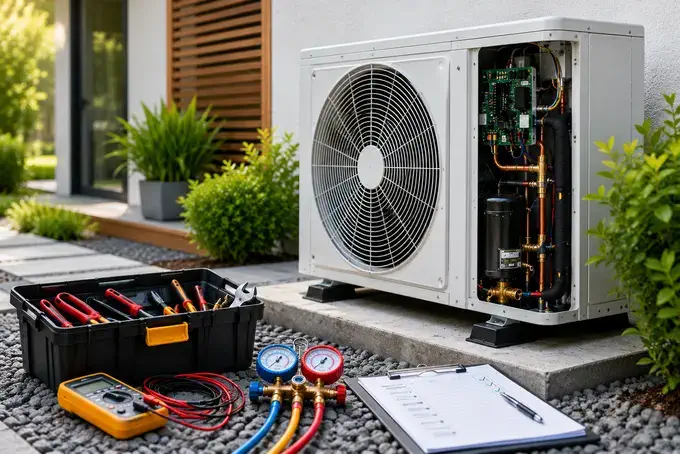
A heat pump diagnosis explains why a system costs more to run than expected, struggles to keep rooms warm, or seems to run constantly. The unit itself usually isn’t broken. The real cause is often incorrect sizing, control settings that were never properly set, rushed commissioning, or heat loss numbers that never matched the property.
A heat pump can be working exactly as designed and still leave you cold and frustrated. A diagnosis figures out whether the problem sits with the equipment, the installation, the controls, or the original design.
Why Some Heat Pumps Fail to Meet Expectations
Performance depends on more than the unit itself. Design, controls, installation, and the property all need to work together. When one piece is off, the whole system suffers.
That’s why two homes with similar layouts can have completely different results. One household gets low bills and steady comfort. The other deals with cold rooms, constant running, and bills that keep climbing.
Homeowner discussions online show this pattern again and again. Two people install similar heat pumps and get very different results, because the design, controls, and heat loss of their homes were never really the same.
Bad sizing, unrealistic heat loss assumptions, rushed commissioning, and poor control settings can all reduce performance long before anything actually breaks.
The Difference Between a Fault and a Performance Problem
A fault means something is broken. A performance problem means the system works, just not the way you expected.
This distinction matters because fixing a performance problem rarely means replacing parts. Most of the time, the cause is design, configuration, or how the system is currently being run.
Fault | Performance Problem |
System not running | High energy bills despite normal operation |
Fault codes | Rooms that struggle to stay warm |
Failed components | Frequent short cycling and inefficient running |
Electrical issues | Poor hot water performance |
Sensor failure | Incorrect controls causing comfort and efficiency issues |
A diagnosis tells you which category your issue falls into. That stops you spending money on repairs you don’t need while the real problem goes unaddressed.
What Does a Heat Pump Diagnosis Actually Examine?
A heat pump diagnosis looks at the factors most likely to affect efficiency, comfort, and running costs. It’s not just a hunt for faults. It’s about understanding why the system behaves the way it does.
Is the System Correctly Sized?
Correct sizing lets a heat pump meet heating demand without wasting energy. Too small, and it struggles in cold weather. Too large, and it short-cycles, which isn’t efficient either.
Sizing decisions get made before installation. If those assumptions were wrong, you’ll feel the effects long after the installers have left.
Were the Heat Loss Calculations Accurate?
Heat loss numbers sit behind nearly every major decision in a heat pump system: equipment size, radiator choices, flow temperatures, and running cost estimates. The Energy Saving Trust’s heat loss calculations guidance explains why this matters so much.
Underestimate heat loss, and the system struggles once it actually gets cold. Overestimate it, and you pay for equipment or upgrades you never needed.
An independent heat loss review tells you whether the original design ever matched how your home actually behaves.
Are the Controls Working Efficiently?
Controls decide when the system runs, how it reacts to temperature changes, and how much energy it uses. Even a good heat pump can run up high bills if the controls were never set up properly.
Scheduling, weather compensation, and flow temperature settings can move the needle on running costs more than most homeowners expect.
Is the System Running at the Right Temperatures?
Flow temperature has a real effect on efficiency. Set it higher than it needs to be, and the system works harder than necessary.
A diagnosis checks whether your current settings balance comfort and efficiency, or whether there’s room to improve both.
Has the Installation Been Properly Commissioned?
Commissioning makes sure everything was configured correctly once installation is finished. Skip it or rush it, and even a well-designed heat pump can underperform, often without the homeowner realising commissioning was ever the issue.
Because commissioning happens at the end of an install, mistakes can sit unnoticed for months. Many homeowners only catch on after living with poor performance or unexplained bills.
Common Signs That a Heat Pump Diagnosis May Be Needed
A diagnosis is worth doing when performance, comfort, or running costs don’t match what you expected.
Watch for:
- Energy bills higher than expected
- Rooms heating unevenly
- Constant operation during mild weather
- Frequent reliance on backup heating
- Comfort levels that never seem consistent
- Conflicting recommendations from different installers
None of these automatically mean a fault. They’re all good reasons to take a closer look.
Why High Energy Bills Don’t Always Mean the Heat Pump Is the Problem
A faulty heat pump isn’t always behind a high bill. Just as often, the cause is heat loss, control settings, flow temperatures, or expectations that never matched how the system was going to perform.
It works the other way too. A heat pump gets blamed for rising bills when the real issue is poor insulation, badly configured settings, or expectations that didn’t account for higher energy use in colder months. Controls set up purely for comfort, rather than efficiency, can push up running costs even when nothing is wrong with the system.
To understand heating performance more broadly, it’s worth seeing how experienced central heating engineers diagnose efficiency problems.
How a Diagnosis Can Improve Efficiency and Comfort
A diagnosis improves comfort and efficiency by pinpointing what’s holding the system back. Once you know that, the fix is usually targeted and a lot cheaper than people assume.
What you might get out of it:
- Identifying settings that increase energy use
- Improving comfort in rooms that struggle to stay warm
- Reducing unnecessary cycling and system strain
- Confirming whether expensive upgrades are actually needed
- Providing clarity when installer recommendations conflict
Independent specialists like UK Heat Pump Help track down performance bottlenecks, check the original design assumptions, and help homeowners figure out whether the cause sits with the equipment, the controls, or the design itself.
Not every problem needs major work. Small adjustments often make the biggest difference. It’s also worth sticking to recognised heat pump maintenance recommendations to keep performance steady long term.
When Should You Consider a Heat Pump Diagnosis?
A heat pump diagnosis is worth considering whenever performance, comfort, or running costs don’t match expectations.
It might be time for one if:
- Your heat pump has never performed as expected
- Running costs seem unusually high
- You’re considering expensive upgrades
- Different installers are giving conflicting advice
- You’re unsure whether the issue is design-related or equipment-related
Catching these issues early saves you spending money you didn’t need to. If you’re weighing a repair against a longer-term upgrade, this boiler repair guide is worth a look too.
A heat pump diagnosis earns its keep whenever something doesn’t add up: unexpectedly high bills, rooms that never feel warm enough, or technical advice that contradicts itself from one installer to the next. Finding the actual cause is almost always cheaper than guessing.
Frequently Asked Questions
How Do You Diagnose Heat Pump Problems?
By looking at system performance, controls, flow temperatures, heat loss assumptions, commissioning quality, and the condition of the equipment. The aim is to find the root cause, not just patch over symptoms.
What Impacts the Performance of a Heat Pump the Most?
Sizing, heat loss, control settings, flow temperatures, and commissioning quality usually matter more than the unit itself.
Why Is My Heat Pump Running All the Time?
Could be cold weather, heat loss, control settings, or how the system was designed. Running constantly doesn’t automatically mean something’s broken, but it’s worth checking.
What Is the Purpose of a Fault Detection Diagnostic System in Heat Pumps?
To catch issues that could hurt efficiency, comfort, or reliability before they turn into bigger problems.
What Are the Benefits of Fault Detection?
Better comfort, less wasted energy, less wear on components, and fewer expensive repairs down the road.
Can a Heat Pump Diagnosis Reduce Energy Bills?
Yes, when it uncovers settings, design assumptions, or operational issues pushing the system to use more energy than it needs to.