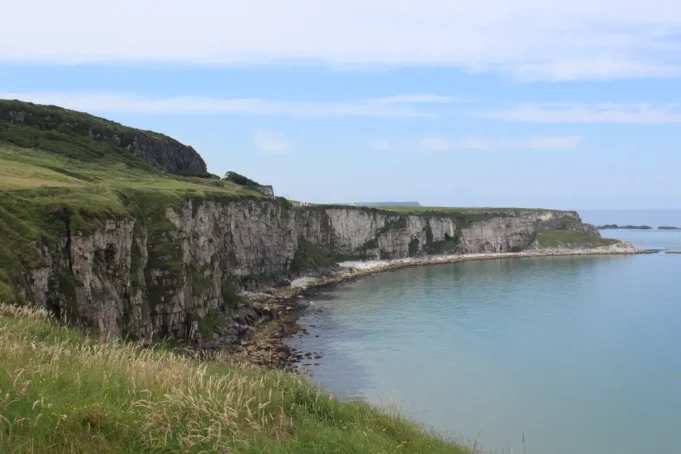
Carrick-a-Rede on the Causeway Coast, one of the most visited and photographically arresting stretches of the Northern Irish coastline, carries a layered identity that reaches well beyond its famous rope bridge. Sitting within a landscape of international geological and cultural significance, the site draws visitors, conservationists, and built-environment professionals alike to questions of how heritage infrastructure is managed, maintained, and protected against the pressures of coastal erosion and mass tourism.
Carrick-a-Rede Causeway Coast and Its World Heritage Setting
The wider setting is formally recognised at the highest international level. According to Springer, the Giant’s Causeway and Causeway Coast was inscribed on the UNESCO World Heritage List in 1986, with its geological importance as the primary criterion for inscription. That status places obligations on land managers, planners, and local authorities to balance public access with conservation of the underlying fabric, whether that fabric is the basalt columns of the Causeway itself or the dramatic cliff-edge terrain around Carrick-a-Rede.
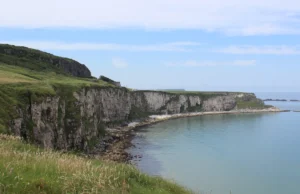
The site at Carrick-a-Rede is located on Whitepark Road, Ballintoy, County Antrim, according to Northern Ireland Holidays. The surrounding coastline is exposed, subject to salt-laden winds and the kind of cyclic freeze-thaw action that places sustained demands on any built structure in the vicinity, from the bridge fixings themselves to visitor pathway infrastructure and retaining works along the cliff approaches.
Both Carrick-a-Rede and the Giant’s Causeway are managed by the National Trust, as noted by Springer, which gives the organisation stewardship responsibility across a substantial portion of this World Heritage coastal corridor. For built-environment professionals, that consolidated management model raises practical questions about long-term maintenance programmes, whole-life carbon accounting for visitor infrastructure, and the design standards applied when any structural element requires renewal or replacement.
Salmon Fishing, Settlement History and the Built Landscape
The human history of Carrick-a-Rede is bound up with fishing rather than tourism. Northern Ireland Holidays records that King James I & VI used the promise of salmon fishing at locations such as this to try to lure Protestant London merchants to settle in Northern Ireland in the early 1600s. The rope bridge itself, in its various historical forms, was erected by fishermen to reach the small island of Carrick-a-Rede, where salmon could be netted as they migrated along the coast. That functional origin means the site carries an industrial as well as a scenic heritage, and any conservation approach must account for both layers.
The built fabric of heritage coastal sites like this one sits at the intersection of several disciplines. Structural engineers assessing the cliff pathways and bridge anchorages must work within conservation constraints that limit material choice and intervention depth. Sustainability consultants engaged in any renewal scheme will need to weigh embodied carbon in replacement materials against the longevity demands of a salt-spray environment, where low-embodied-carbon timber, for instance, may require more frequent replacement than galvanised steel or stainless fixings.
The Causeway Coast’s World Heritage designation also means that any works of substance within the buffer zone are subject to statutory scrutiny, with Historic Environment Division in Northern Ireland playing a role analogous to Historic England elsewhere in the UK. Proposals for new visitor infrastructure, improved accessibility routes, or drainage works all need to demonstrate that outstanding universal value is not compromised, a requirement that shapes programme timescales and procurement routes from the earliest design stages.
National Trust management of both the Giant’s Causeway and Carrick-a-Rede creates a rare opportunity for joined-up asset management planning across the World Heritage corridor, with maintenance regimes, material specifications, and carbon reporting potentially aligned across the two flagship sites rather than managed in isolation. Whether that opportunity is being fully taken up in current maintenance programmes is a question the Trust’s own conservation plans will need to address.