
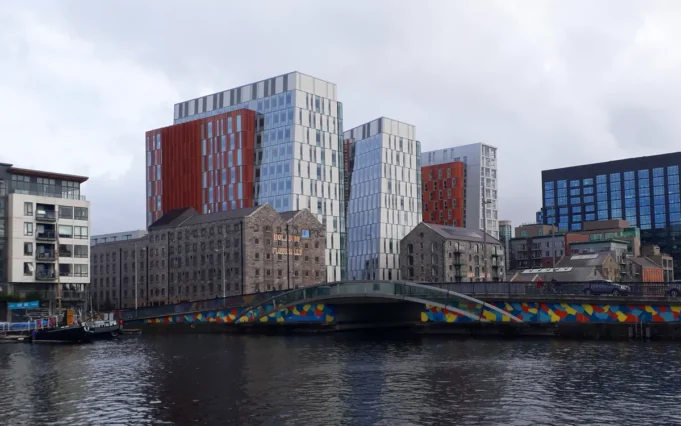
A Bristol Harbour regeneration competition has been launched seeking ideas for the future of one of England’s most visited urban waterfronts, with the call for entries reported by the Architects’ Journal. The competition arrives at a pivotal moment for the Floating Harbour, with Bristol City Council having already set the strategic framework within which any winning proposal would need to operate.
A 20-Year Vision for the Floating Harbour
In February 2025, Bristol City Council approved its Harbour Place Shaping Strategy, a document that sets out a 20-year framework for the future of the Floating Harbour area, according to Guinness Homes. That long-range horizon is not incidental. A generation-length strategy demands that any architectural or infrastructure proposal engage seriously with climate trajectories, not just present-day performance metrics. Designers entering the Bristol Harbour regeneration competition will effectively be working within, and responding to, that adopted policy context.
The scale of ambition embedded in the strategy is considerable. The wider regeneration programme is expected to include about 1,200 new homes, alongside changes to the road network, BBC News has reported. For any design team thinking in terms of embodied and operational carbon, a residential programme of that magnitude raises immediate questions: what fabric performance standards will apply, what on-site energy infrastructure will serve the new neighbourhoods, and how does the existing waterfront building stock interact with, or constrain, the new development parcels?
Bristol Harbour Regeneration Competition in Its Policy Context
The Harbour Place Shaping Strategy approval gives the Bristol Harbour regeneration competition an unusually clear planning backdrop. Competition briefs for urban waterfront sites can sometimes land in policy vacuums, where entrants must second-guess future planning appetite. Here, the 20-year strategy at least signals the council’s direction of travel: growth, connectivity changes, and a substantial new residential population living in close proximity to the water.
From a low-carbon design standpoint, that combination of constraints and opportunities is rich. Waterfront locations carry inherent flood-risk exposure that will only intensify across a 20-year delivery window as climate projections tighten. Passive design strategies, building orientation relative to prevailing south-westerly winds, and the thermal mass of any retained heritage structures all become live design variables rather than theoretical considerations. LETI targets for new residential and BREEAM requirements for any commercial or cultural uses within the masterplan area would logically apply to schemes emerging from this competition.
The road network changes flagged in the strategy also carry carbon implications beyond construction phase. Reconfiguring movement patterns around a waterfront of this scale affects active travel provision, public transport integration, and the longer-term operational carbon profile of the neighbourhood. Whether the competition brief pushes entrants to address that transport layer alongside architecture will shape the depth of response the organisers receive.
Bristol’s Floating Harbour has a well-documented industrial heritage, and any regeneration of the scale envisaged must navigate the embodied carbon implications of demolition versus retention. Reusing existing building fabric typically delivers substantial upfront carbon savings compared with new-build replacement, a calculation that RIBA Sustainable Outcomes guidance and the RICS whole-life carbon assessment framework both support.
With the Harbour Place Shaping Strategy now adopted policy and the residential quantum set at around 1,200 homes, the competition represents an early design-thinking exercise within a regeneration programme that will run well into the 2040s. Entrants working at the intersection of urban design, climate resilience and low-carbon construction will find the brief places them directly in the territory the council’s own 20-year strategy has staked out.