Sustainable Building and Renovation in Hertfordshire: The Role of Safe Site Access
Sustainable construction is becoming increasingly important across Hertfordshire as homeowners, developers and contractors look for practical ways to improve buildings while reducing waste, energy consumption and environmental impact.
From upgrading older properties to constructing more energy-efficient homes, sustainable renovation involves careful planning at every stage. One area that can sometimes be overlooked is site access.
Providing safe and practical access for workers is essential for keeping renovation projects organised, efficient and compliant. Well-planned scaffolding can support this by creating stable working platforms and reliable access to areas that would otherwise be difficult to reach.
What Makes a Renovation Project Sustainable?
Sustainable renovation is not limited to using environmentally friendly materials. It involves considering the entire project, including how materials are transported, how much waste is generated, how efficiently work is completed and how the finished building performs.
For example, improving insulation, repairing a roof, installing solar panels or upgrading windows can improve a property’s energy performance. However, these improvements still require careful installation to achieve the intended results.
Good project planning can help minimise unnecessary material use, reduce delays and avoid having to repeat work later.
The Importance of Safe Site Access
Many renovation projects involve working several metres above ground level. Roof repairs, external insulation, rendering, window replacement and solar panel installation all require tradespeople to access elevated areas safely.
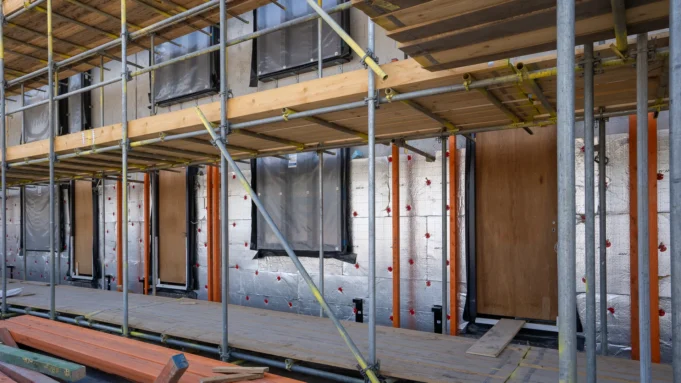
Scaffolding services can provide a stable working platform and dedicated access routes around a property. Compared with repeatedly moving ladders or relying on temporary access arrangements, a properly planned scaffold can allow workers to access larger areas more efficiently.
This is particularly valuable on renovation projects where several trades need to work on the external areas of a property.
Supporting Efficient Work on Site
Time and resources are closely connected on any construction project. Delays can result in additional labour, equipment hire and transport requirements.
Effective site access can help tradespeople work more efficiently. When materials, tools and working areas can be accessed safely and conveniently, contractors can spend more time carrying out the actual improvement work.
For example, a roofing team may need to remove old materials, inspect the roof structure and install new components. Having suitable access around the working area can make these stages easier to coordinate.
Efficiency does not automatically make a project sustainable, but reducing avoidable delays and repeated work can contribute to better resource management.
Scaffolding and Older Hertfordshire Properties
Hertfordshire contains a wide variety of residential properties, including older homes that may require careful renovation and refurbishment.
Older buildings can present additional challenges. Roofs may have unusual shapes, external walls may require repair, and access can be restricted by neighbouring buildings, gardens or narrow spaces.
A scaffolding system should therefore be planned around the individual property rather than treated as a standard installation.
A site assessment can help identify potential access issues, ground conditions, building features and the areas that contractors need to reach. This allows the scaffolding arrangement to support the actual scope of the renovation.
Supporting Energy-Efficient Upgrades
Many sustainable renovation projects focus on reducing a property’s energy consumption. Common improvements include:
- Roof and loft insulation
- External wall insulation
- Solar panel installation
- Energy-efficient windows and doors
- Roof repairs and upgrades
- External rendering
- Improvements to building fabric
Several of these improvements involve external or elevated work. Suitable scaffolding can provide contractors with consistent access while they install or repair these systems.
This is particularly useful when multiple improvements are being completed during the same renovation. Where practical, coordinating external works during a single scaffolding period may help reduce repeated installation and dismantling.
Reducing Disruption During Renovation
A well-organised construction site is generally easier to manage. Safe access routes can help separate working areas from pedestrian areas and reduce unnecessary movement around the site.
For residential renovations, this is especially important because homeowners may continue living in the property while work is taking place.
Scaffolding can also be combined with appropriate protective measures where required, helping contractors manage the working environment and minimise disruption to the surrounding property.
Temporary Roofs and Weather Protection
British weather can create challenges for renovation projects, particularly when roofing work exposes parts of a building to the elements.
For larger projects, temporary roof systems supported by scaffolding can provide protection while structural or roofing work is carried out. This can help contractors maintain progress during changeable weather and protect parts of the building from rain.
The suitability of a temporary roof depends on the project, building and site conditions, so it should be considered during the planning stage rather than added only when bad weather becomes a problem.
Choosing the Right Access Solution
There is no universal scaffolding solution for every renovation project. The appropriate arrangement depends on factors such as building height, property layout, ground conditions, project duration and the type of work being undertaken.
A competent scaffolding contractor should assess the site and understand what the tradespeople need to accomplish before recommending an access system.
It is also important that scaffolding is properly erected, inspected and maintained throughout the period it is in use. Safety should remain a priority from installation through to dismantling.
Planning for Sustainability From the Start
Sustainability is most effective when it is considered before construction begins. Homeowners and project managers should discuss access requirements alongside materials, energy improvements, waste management and the overall construction programme.
Early coordination between the scaffolding contractor and other trades can help identify potential problems before work starts. It can also make it easier to schedule different stages of the renovation around the available access.
For larger projects, this type of planning can make a meaningful difference to how efficiently resources are used.
Building a Better Future for Hertfordshire
Sustainable construction is about more than the finished building. The way a project is planned and delivered also matters.
Safe and reliable site access supports workers, protects properties and can help contractors complete renovation work efficiently. From improving insulation and installing solar panels to repairing roofs and upgrading external walls, scaffolding can play an important supporting role in sustainable building projects.
For homeowners and developers across Hertfordshire, considering site access from the beginning can help create renovation projects that are not only safer, but also better organised and more efficient.