
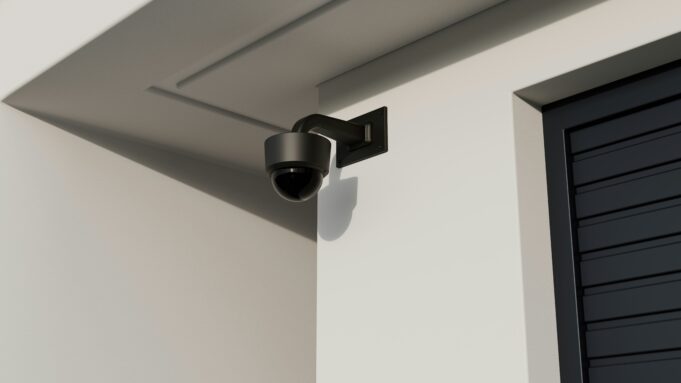
Worrying about property security used to feel like something for high-risk businesses or commercial sites with something specific to lose. Not so much anymore. Walk down most residential streets in Cheltenham and you’ll spot doorbell cameras, driveway sensors, the occasional discreet unit tucked under a porch roof. Cheltenham CCTV has become genuinely normal — part of everyday life rather than something only “security-conscious” people bother with.
What’s interesting is how rarely it operates alone now. Most setups combine it with intruder alarms Cheltenham residents already have, or fold it into broader domestic security Cheltenham measures covering the whole property. Understanding how these pieces fit together makes it a lot easier to see what CCTV’s actually good for — and where its limits are.
What CCTV does now versus what it used to
Recording footage used to be the whole job. Now it’s the starting point. Across residential streets, shops, and business premises in Cheltenham, modern systems offer real-time alerts, remote viewing from anywhere, and automated detection that flags things worth looking at.
The underlying motivation hasn’t really shifted though: deter opportunistic crime, keep an eye on vulnerable access points, support insurance or legal processes if needed, improve safety for people on-site, and provide evidence when disputes or investigations come up. Prevention plus documentation — that combination is really why CCTV’s become so central to security setups generally.
What’s actually inside a modern system
Most installations now include high-definition or 4K capture, infrared night vision, motion-triggered recording, mobile app access, and cloud or hybrid storage. Together, these mean monitoring in real time or reviewing footage after the fact — regardless of where you physically are.
For homes specifically
CCTV’s become a core piece of domestic security Cheltenham planning for a lot of households — particularly around entry points and areas where visibility from inside the house is limited.
Common placements: front doors and porches, driveways and parking areas, rear gardens and patios, side passages and garage entrances. Visible cameras can put off intruders before they even try anything; more discreet setups still capture what’s needed without being obvious about it. Either way, recorded footage often ends up being the thing that actually identifies what happened afterward.
Privacy still needs care, though. Cameras work best — and avoid unnecessary friction with neighbours — when they’re focused on your own property rather than sweeping across next door’s garden or a shared path. Getting the configuration right from the start avoids most of this.
Pairing CCTV with alarms
A more complete approach links CCTV with intruder alarms Cheltenham systems — detection and verification working together rather than separately.
When linked, a triggered alarm can start recording automatically, send an instant alert, and give visual confirmation of what set things off — which also helps cut down false callouts to monitoring services, since someone can actually check footage before assuming the worst.
The trade-off is added complexity. Installation gets more involved, upfront costs go up, and professional setup tends to matter more for getting the integration right. For a lot of people though, the extra reliability and faster response more than justifies it.
Getting the system design right
A few things genuinely shape how well a system performs.
Property layout matters first — identifying entry points and blind spots, and for larger properties, making sure camera coverage actually overlaps rather than leaving gaps.
Then there’s wired versus wireless. Wired systems offer strong, stable connections and consistent image quality, with less interference — but installation’s more disruptive and repositioning later isn’t simple. Wireless is easier to install and expand, more flexible on placement — but depends on network reliability, and signal disruption is a real possibility depending on the property.
Which makes more sense really comes down to the building itself and what long-term needs look like.
Where the tech’s heading
AI-enabled cameras can now tell the difference between people, animals, and vehicles — meaning fewer pointless alerts and generally more accurate monitoring.
Cloud storage adds a layer of protection too — footage stored off-site means theft or hardware failure doesn’t automatically mean losing everything, plus remote access works across multiple devices.
And CCTV’s increasingly part of broader smart home ecosystems — working alongside alarms, lighting, access control, all coordinating responses to security events rather than operating as isolated systems.
Staying on the right side of the law
CCTV needs implementing responsibly — data protection principles matter, especially if cameras capture anything beyond your own property boundary.
Businesses carry extra responsibilities too — policies around employee monitoring, how long footage gets retained, who can access it, and being transparent about all of this. Sticking to these principles keeps surveillance both effective and, just as importantly, lawful.
Maintenance — often the overlooked bit
A system’s only as good as its upkeep. Regular maintenance means cleaning lenses, checking that recording’s actually working, updating firmware, testing remote access, and making sure connectivity and power supply are solid.
Skip this, and reliability drops — often without anyone noticing until it matters, at exactly the moment a system’s needed most. For anyone wanting more detail on design or installation approaches, looking into cheltenham cctv resources tends to offer useful technical grounding.
What it actually costs
Pricing varies a lot depending on complexity — number of cameras, resolution, storage needs, whether it’s integrated with alarms or smart systems, and how complex installation is generally.
Cheaper systems can cover basic needs fine. But higher-quality setups tend to perform better and last longer — worth weighing against just going for the lowest quote.
Conclusion
Cheltenham CCTV keeps growing in popularity because it genuinely works better now — more adaptable, more capable, more integrated than it used to be. Combined with intruder alarms Cheltenham systems and wider domestic security Cheltenham strategies, it offers a real combination of deterrence, detection, and evidence if things go wrong.
But technology’s only part of the picture. Thoughtful planning, correct installation, and responsible use matter just as much — maybe more. Get those right, and the result is a setup that’s practical, compliant, and actually holds up when it counts.