Some fencing solutions try to do one thing well. Mesh fencing tries to do several at once — and mostly succeeds. Strong enough to deter intrusion, open enough to maintain visibility, durable enough for permanent installations, but flexible enough for temporary worksites too. That combination explains why it’s everywhere — construction sites, schools, farms, sports facilities, industrial sites.
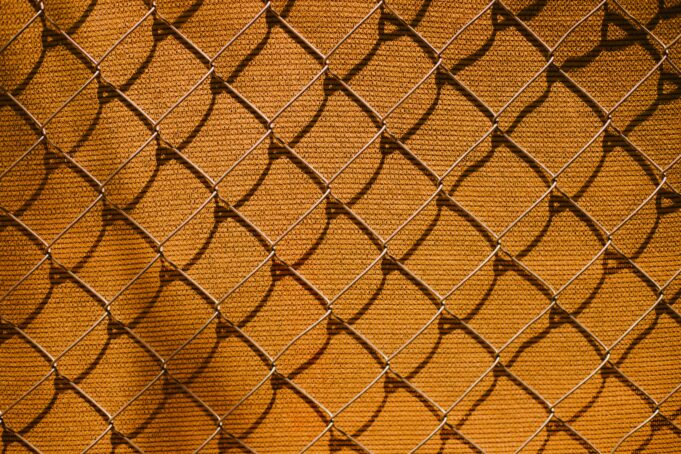
The basic idea is simple: welded or woven steel wire in a grid pattern, fixed to posts or panels. Hard to breach, but you can see straight through it. Unlike solid fencing, mesh fencing doesn’t trade security for visibility — it tries to offer both.
So what makes it work, and where does it fall short?
Where it shows up
Construction and building sites, industrial facilities, schools and public buildings, transport infrastructure, agricultural boundaries, sports and recreational areas — mesh fencing covers a remarkably broad range. Often it works alongside a fence rail or railing system too, particularly where both visibility and clear boundary definition matter.
Why it’s so widely used
Versatility is the main draw. The same basic concept scales from low-security applications — parks, boundary marking — right up to high-security setups using thicker wire and anti-climb patterns. Few fencing types span that range as comfortably.
Visibility matters a lot too. Construction sites particularly benefit — supervisors can monitor activity across the site, and unauthorised access becomes harder to attempt unnoticed when everything’s visible.
And cost-wise, mesh tends to be more efficient than heavier structural alternatives, especially across large perimeters where every metre adds up.
What actually determines performance
A fence with wire mesh system depends on several factors working together: wire gauge (thickness), mesh aperture size, coating type — galvanised or PVC-coated — post spacing and depth, and how well it’s actually installed.
Heavier gauge with smaller openings tends to suit higher-security environments. Lighter mesh often does the job fine for agricultural use or simple boundary marking. Properly installed, with correct corrosion protection, a fence with wire mesh can last a long time — galvanised coatings resist rust well, while PVC adds both durability and colour options.
The security side
Mesh fencing earns its security reputation, but specification and installation quality determine how much that’s actually worth.
Deterrence comes partly from visibility itself — because activity’s visible on both sides, opportunistic intrusion becomes less appealing. Tighter mesh patterns reduce footholds too, making climbing genuinely harder. For higher-security needs, that often gets combined with extended heights, angled tops, and secure gate systems.
Mesh rarely works in isolation either — it’s frequently part of a layered approach alongside lighting, CCTV, and access control. Sometimes it’s paired with a fence and railing layout too, balancing controlled access in some areas with visual openness in others.
Agricultural uses
In rural settings, traditional rail fencing handles general boundary marking and livestock containment well enough — but mesh fencing steps in where containment needs get more demanding. Keeping smaller animals secure, protecting crops from wildlife, reinforcing boundaries across uneven terrain.
Often it’s rail fencing defining the perimeter generally, with mesh adding a more functional containment layer where it’s actually needed.
Design factors that matter
Height affects security obviously, but taller fences aren’t always appropriate — particularly in residential or public spaces where appearance carries weight too.
Mesh aperture size is a genuine trade-off: smaller openings mean better security and harder climbing, but larger openings tend to be cheaper and look visually lighter.
Coating and durability depend heavily on environment — coastal or industrial sites generally need enhanced corrosion protection, or the fence won’t last as long as it should.
Ground conditions matter too — soft or uneven terrain often needs deeper posts or reinforced bases just to keep everything stable.
Structural support — easy to overlook
Mesh is panel-based, sure, but posts and rails still do a lot of the actual work — handling wind load, physical impact, general stability. In some setups, a fence rail design gets incorporated specifically to improve rigidity and spread stress more evenly, particularly across long runs or exposed sites where the structure takes more punishment.
Good structural design upfront tends to mean fewer maintenance headaches down the line.
Combining mesh with railings
On some sites, mesh handles secure operational areas while railings cover public-facing sections where aesthetics matter more. Entrances and transition zones sometimes use combined systems too — different fencing railing approaches for different parts of the same site, without the overall look feeling disjointed.
Installation and upkeep
Even quality mesh fencing underperforms if installation’s sloppy. Post alignment, proper tensioning, secure fixings, adequate footing depth — all of it matters more than people expect.
Once installed, maintenance demands stay relatively low — but periodic inspection matters. Loose fixings, corrosion spots, ground movement — catching these early prevents bigger problems later.
A typical construction site scenario
On an urban site, mesh fencing secures the perimeter while keeping visibility intact for safety monitoring — workers can see movement around the site, security teams spot issues without anything blocking their view, and signage stays clearly visible too. A fence with wire mesh handles this combination — access control plus operational visibility — about as well as anything available.
What’s changing
Hybrid security setups are growing — mesh increasingly paired with electronic surveillance and access control rather than standing alone.
Coating technology keeps improving too — better galvanisation and polymer coatings extending service life and cutting maintenance costs over time.
And architects are increasingly working mesh systems into broader landscape designs, particularly where transparency and openness genuinely matter to how a site reads visually.
Where it falls short
Mesh isn’t right for everything. Privacy is lower than solid fencing, obviously. Without upgrades, it can be vulnerable in genuinely high-security contexts. Some architectural settings find it visually limiting. And performance depends heavily on correct installation — get that wrong, and even good mesh underperforms.
Getting the specification right from the start avoids most of these issues.
Bottom line
Mesh fencing earns its place as one of the most adaptable perimeter solutions out there — visibility, strength, and cost efficiency all in one package, suited to everything from construction sites to farms to public spaces. Whether it’s standalone, or combined with rail fencing, fence rail structures, or fencing railing layouts, it flexes to fit different security and environmental needs.
Specified and installed properly, a fence with wire mesh delivers long-term reliability — quietly supporting both safety and day-to-day operations across a huge range of projects.