I once visited BedZED on a crisp morning when the sun glinted off its solar panels and you could almost feel the contrast between that quiet cul-de-sac and every draughty Victorian terrace I’d lived in as a young reporter chasing climate stories. What struck me then was not just the technology — it was the palpable sense that sustainability was less an abstract ideal here and more a lived, breathing environment.
The story of net zero building across the UK is one of improvisation and stubborn optimism. In Oxford, a modest detached house became a proving ground long before “net zero” was a buzzword, using passive sunspaces and a pioneering photovoltaic roof to shrink a family home’s carbon footprint to a fraction of its peers. That was in the mid-1990s — an era when most architects still spoke of renewables as futuristic curios. In hindsight it reads almost like an archaeological find from the early days of environmental design, but the lessons it offered on thermal mass and human behaviour were ahead of their time.
Head south to Hackbridge and BedZED, another piece of early 21st-century experimentation, where rows of townhouses, offices, and communal spaces were stitched together in the hope of creating the UK’s first carbon-neutral neighbourhood. Back then, the idea that a whole community could trade grid dependency for local renewables and smarter design seemed audacious. Today, it feels like a precursor to developments that are now standard practice in many parts of Europe.
Brighton’s Earthship — an almost whimsical structure built from discarded tyres, glass bottles, and earth — looks, at first glance, less like a piece of architecture and more like a sculptural experiment. Yet that’s precisely its value: it forces you to rethink what “building” can mean, how waste and materiality might converge to create warmth and shelter without ongoing energy bills. Walking through the thick walls on a blustery afternoon, you sense a curious tension: here is a place that performs technically and philosophically, but also challenges every conventional notion of what a home should look like.
These early projects taught the industry invaluable lessons, but the narrative of net zero in the UK has always straddled the line between pioneer builds and mainstream adoption. In more recent years, sustainability has woven into the very fabric of public infrastructure and community buildings. Fortis House in Kent, a social housing project built with modular techniques, didn’t just aim to meet carbon targets — it surpassed them, achieving negative net carbon when measured per square metre. Through careful assembly offsite and an almost “fabric first” ethos, it showed that low carbon need not be an elite luxury but can be a replicable model for affordable homes.
That same awards shortlist that celebrated Fortis House also speaks volumes about the breadth of net zero thinking now: a town hall in South London that married heritage conservation with thought-ful low carbon retrofit; a wastewater treatment plant pioneering emissions-cutting technology; and a bus station in Halifax with wildflower green roofs and solar arrays that serve a transport hub. These aren’t showpieces tucked away in eco-villages: they are civic, everyday places where people work, wait for buses, and live.
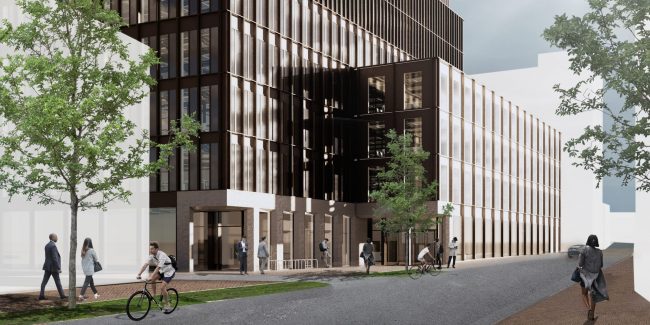
Brent Cross Town is perhaps the most ambitious yet, positing a net zero carbon “town” by 2030, with parks, homes, and public spaces conceived as an integrated whole rather than discrete projects. It underscores a shift that feels almost inevitable: sustainability is not simply for the avant-garde but central to how planners now imagine urban life.
Yet, it’s not all smooth sailing. Every case study hints at the tension between aspiration and reality. Historic buildings, for instance, are often caught in a paradox: listed status can protect architectural heritage but also make energy performance upgrades fiendishly complex and expensive. And while the UK Green Building Council and others have published frameworks and catalogues to help the industry share best practice, there’s still a reluctance among some developers to lean fully into net zero until market demand, regulation, and cost incentives align more snugly.
Walking past a refurbished civic hall or a ribbon of new homes with tidy solar arrays, it’s easy to admire the visual signs of sustainability. But the deeper shifts are about process and collaboration — planners and engineers iterating performance modelling together, contractors rethinking supply chains, and community groups demanding buildings that do more than look good on a render. That’s where the real craft of net zero resides: in the messy middle of deadlines, budgets, and building physics.
These case studies are not shrine pieces. They are workshops, experiments, and sometimes compromises — but ones that collectively show the UK moving from modest, quirky beginnings toward a more integrated practice of low carbon construction. In them you see a nation negotiating its past and future: retrofitting heritage while cutting emissions; inventing new materials and methods; and, in some places, reimagining what a town might be when the air we breathe and the energy we use are rebalanced rather than burned.
Not so long ago, net zero buildings felt like marquee projects you’d tour on industry trips, the kind of thing you’d jot thoughts about in a notebook and debate with colleagues over coffee. Today, they sit cheek by jowl with everyday life — schools, homes, offices — quietly reshaping how people live and how cities breathe. And in that gradual, unglamorous diffusion lies a kind of optimism: one that admits there’s more to be done, but also acknowledges that, brick by brick, carbon by carbon, a different built environment is emerging.