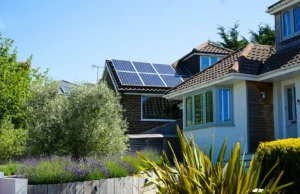
Most people building or managing low-carbon properties obsess over insulation R-values and solar panel efficiency. Fair enough. But here’s the thing: a building that saves energy while losing equipment to theft or vandalism isn’t sustainable — it’s just expensive in a different way.
Physical security and low-carbon properties belong in the same conversation. They’ve just been kept apart for too long.
Security done right doesn’t conflict with green building goals. It reinforces them. Every piece of equipment protected is one fewer replacement purchase. Every unauthorized entry prevented is one less repair bill, one less disruption to systems that took serious resources to install.
Durability Is a Sustainability Argument
Think about what gets thrown away when security hardware fails prematurely. Manufacturing, transportation, packaging, disposal — every replacement cycle carries an environmental footprint. Products built to last 20 years instead of five aren’t just cost-effective; they’re genuinely better for the planet.
This applies to locking systems as much as it does to windows or cladding. High-quality mechanical hardware, chosen for the right environment and installed properly, can run quietly for decades with minimal maintenance. That’s the kind of lifecycle performance sustainable building owners should be chasing.
Why Physical Locks Still Hold Their Ground
Smart tech gets a lot of attention right now. Remote monitoring, digital access management, integrated building automation — these systems have real advantages. But they depend on power, connectivity, and software that ages out.
Padlocks don’t need Wi-Fi.
That’s not a joke. For utility compounds, maintenance access points, gate security, and equipment storage across low-carbon properties, a well-made mechanical lock remains one of the most dependable tools available. No firmware updates. No battery replacement alerts at 2am. Just reliable protection, day after day.
Weather-resistant materials extend that reliability outdoors. Corrosion resistance matters on buildings where renewable energy equipment and storage systems sit exposed to the elements — that gear is expensive, and so is replacing it.
Managing Access When Multiple People Need It
Shared buildings complicate things fast. Apartment blocks, community facilities, co-working spaces, educational buildings — they all involve multiple users, rotating staff, contractors coming and going. Tracking physical keys in these environments is a headache that often becomes a security gap.
Combination Padlocks sidestep that problem neatly. No keys to lose, no locksmith calls when someone leaves the organization, no unauthorized copies floating around. Update the code when circumstances change and move on. For maintenance teams and shared-use facilities, that kind of flexibility has genuine operational value — less administrative drag, more consistent control.
Construction Sites Are Vulnerable Too
Retrofit and renovation work on low-carbon properties creates its own security window. Tools, materials, temporary infrastructure, renewable energy equipment waiting for installation — all of it sits on-site, often overnight, often inadequately protected.
Theft during construction doesn’t just cost money. It creates waste. Replacement purchases mean additional manufacturing, more transportation emissions, more packaging. Solid site security quietly supports sustainability goals by keeping that waste from happening in the first place.
Selecting Hardware Worth the Investment
The circular economy argument here is straightforward: buy durable, replace less. Security hardware that holds up under real-world conditions — UV exposure, rain, temperature swings, heavy use — reduces the demand for replacement manufacturing over time.
Worth asking when evaluating options: what’s the realistic service life under the actual conditions this product will face? Indoor storage security is different from an exposed coastal installation. Getting that match right matters both for performance and for long-term sustainability.
The Bottom Line
Low-carbon properties represent serious investment — in materials, technology, and intention. Protecting that investment isn’t separate from sustainability; it’s part of it. Padlocks and Combination Padlocks aren’t glamorous additions to a green building spec. But they’re practical ones, and in property management, practical tends to outlast fashionable every time.
The buildings that perform best over 30 or 40 years are the ones where every detail — including the lock on the solar battery compound — was chosen with longevity in mind.