
The UK-Japan investment deal announced as Prime Minister Sir Keir Starmer met his Japanese counterpart Sanae Takaichi in London commits Japanese firms to more than £9bn in UK infrastructure and financial services alongside up to £9bn directed at UK offshore wind, with Downing Street saying the agreement will create tens of thousands of jobs. The total package reaches £18bn, though Downing Street acknowledged it is not clear how much of the investment listed represents new money rather than previously announced plans.
Takaichi, speaking through a translator, described the UK as ‘an extremely important partner’. Starmer characterised Sunday’s talks at Downing Street, which included Japanese business leaders, as ‘very productive’, saying the agreement will build a ‘new era of co-operation’ between the two nations.
Which Japanese Firms Are Committing to UK Projects?
Three of the largest names from Japan’s property sector are central to the infrastructure strand of the UK-Japan investment deal. Mitsubishi Estate, Mitsui Fudosan, and Nomura Real Estate are among the firms Downing Street said had agreed to spend billions over the next five years on infrastructure and real estate projects.
The commitments from at least two of those firms are already moving beyond heads of terms. According to The Real Deal, Mitsui Fudosan is directing $1.47bn into a major British Library extension project alongside Stanhope, with completion slated for 2032. Separately, Mitsubishi Estate broke ground this week on a $1.07bn office project on London’s South Bank. Both schemes illustrate how Japanese capital is moving from intent to concrete activity in the UK built environment.
For the construction and development sector, the scale of these individual schemes matters. A $1.47bn cultural and mixed-use development anchored by the British Library extension and a $1.07bn commercial office scheme breaking ground simultaneously represent a considerable injection into London’s project pipeline, with implications for supply chains, embodied carbon budgets, and procurement timelines running well into the next decade.
Offshore Wind, Nuclear and the GCAP Fighter Jet Programme
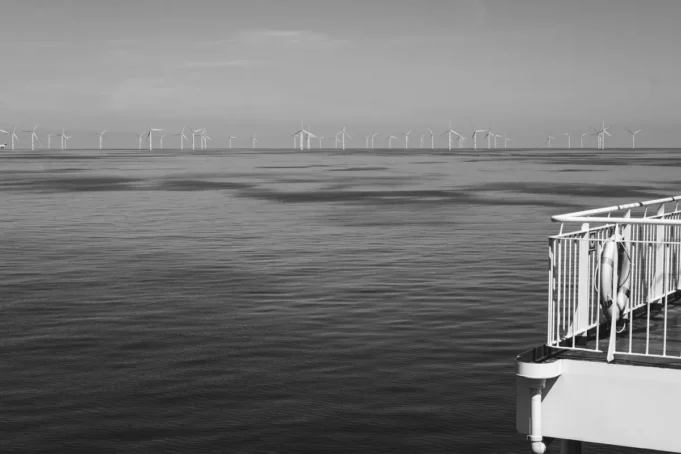
The offshore wind component, at up to £9bn, is the strand with the most direct relevance to the UK’s low-carbon energy transition. No breakdown of individual project commitments within that figure was provided by Downing Street, and the distinction between new capital and recycled announcements applies here as it does across the broader deal.
Beyond wind, Starmer said he was ‘really pleased’ that both countries had reaffirmed their commitment to the GCAP fighter jet programme, which is also being developed alongside Italy. A separate technology agreement will link UK research and development and software expertise with Japanese manufacturing. Rolls-Royce will work with Japan’s Atomic Energy Agency to develop next-generation nuclear technologies, a collaboration that sits alongside the government’s broader interest in advanced nuclear as part of its energy security strategy.
Economic Context: Growth Pressures and the IMF Warning
The deal arrives as the UK economy faces a difficult period. GDP grew by 0.6% during the first three months of the year, but analysts expect growth to be sluggish in the months ahead. The International Monetary Fund said last month that the US-Israel war with Iran will hit the UK the hardest of the world’s advanced economies. The Bank of England has warned that UK inflation could reach 6% in the worst-case scenario as a consequence of the conflict.
Against that backdrop, the shadow business and trade secretary Andrew Griffith said the Conservative Party welcomed ‘any deal that brings investment’ to the UK, but added that Labour’s ‘tax hikes and employer red tape are doing huge damage, destroying jobs and putting more and more people onto welfare’.
With Mitsubishi Estate’s South Bank scheme already in the ground and the British Library extension project carrying a 2032 target completion date, the built environment strand of the UK-Japan relationship now has concrete milestones against which delivery can be measured. Downing Street has said the overall agreement will boost jobs and long-term growth; the International Monetary Fund‘s near-term outlook for the UK economy will provide the pressure test.