A design competition for a new Kharkiv multimodal transport hub has been launched with UK backing, adding a major infrastructure brief to the growing body of international reconstruction work focused on Ukraine’s second-largest city. The contest seeks proposals for an interchange that would integrate multiple modes of urban and regional movement in a city whose transport infrastructure has sustained repeated damage since 2022.
Competition scope and the Kharkiv multimodal transport hub brief
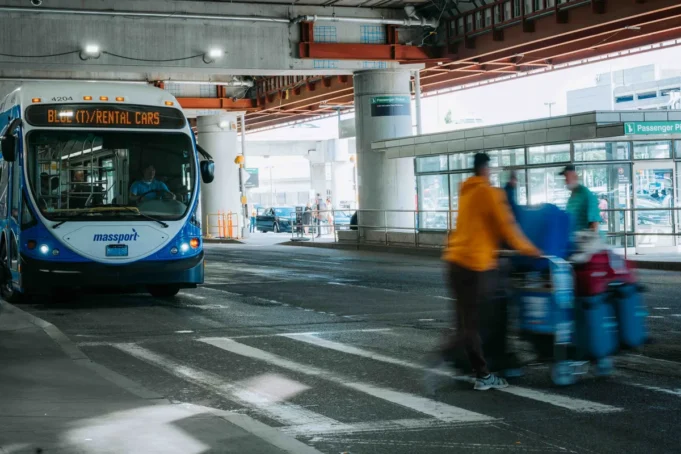
Details of the competition brief centre on the development of a new interchange facility in Kharkiv, conceived as a multimodal hub capable of consolidating the city’s fragmented transport connections. Multimodal interchange design of this type typically requires teams to reconcile pedestrian flows, local transit, regional rail connections and, increasingly, active-travel infrastructure within a single coherent structure. The carbon implications are considerable: a well-designed interchange can shift significant modal share away from private vehicles, reducing both the operational carbon associated with urban mobility and the embodied carbon burden of sprawling, single-mode infrastructure built piecemeal over time.
The competition format follows a pattern that has become common in post-conflict and reconstruction contexts, where open or invited design contests are used to surface credible, buildable proposals from international practices alongside local teams. UK backing for the contest signals continued engagement from British institutions in Ukraine’s longer-term physical recovery, at the level of architectural and urban design procurement rather than emergency relief alone.
Mayor of Kharkiv joins the jury
According to Architecture Competitions, Ihor Terekhov, the Mayor of Kharkiv, served as a jury member for the competition. His direct involvement at jury level reflects the degree to which city leadership is engaged with the reconstruction design process, rather than delegating it entirely to technical or international bodies. For practices preparing submissions, mayoral participation in jury deliberations typically indicates that proposals will be assessed partly on political and civic feasibility, not solely on architectural or engineering merit.
Kharkiv’s proximity to the front line has made reconstruction planning simultaneously urgent and constrained. The city of Kharkiv has continued to function as an administrative and commercial centre throughout the conflict, which means transport infrastructure has remained in active use even as parts of it have been damaged or destroyed. Any new interchange must therefore be designed with resilience and phased delivery in mind, qualities that align closely with low-carbon construction principles around adaptive reuse and reduced material waste.
From a sustainability standpoint, the transport hub typology sits at the junction of operational and embodied carbon concerns. Structural choices (whether to use mass timber, low-carbon concrete, or hybrid steel-timber systems) will materially affect the scheme’s whole-life carbon profile. Equally, the operational energy demand of a large public interchange, covering heating, ventilation, lighting and passenger information systems, will need to be addressed against a backdrop of an energy grid under significant stress.
International design competitions for reconstruction projects in conflict-affected cities have precedent in post-war European history, and the Kharkiv multimodal transport hub contest fits within a wider effort coordinated between Ukrainian authorities and international partners to ensure that rebuilding is not simply reactive but planned to a standard that serves the city for decades. The UK Government‘s backing for the contest reinforces its stated commitment to Ukraine’s recovery at a technical and institutional level, channelling support through design procurement as well as financial aid. With Mayor Terekhov on the jury and an international competition framework in place, the process for selecting a scheme is now formally under way.