
Smart energy systems don’t usually make themselves known. They hum quietly behind walls, change the lighting without saying anything, and reset the heating before anyone thinks to complain. Most people only notice them when something goes wrong, which may be the best sign of how well they work. Energy has changed from a utility that people react to into a system that expects behavior in modern buildings, especially in the UK.
At one point, the idea of buildings taking care of themselves seemed too ambitious, even selfish. In the 1990s, early attempts at automation were clunky, costly, and didn’t offer much more than novelty. But the calculation has changed because energy prices are going up and environmental standards are getting stricter. Smart energy systems UK developers now see as basic infrastructure instead of optional upgrades.
Today, energy control isn’t just about one device or dashboard. It is a system of sensors, timers, learning algorithms, and automatic responses that change based on how people actually use a building. A meeting room that is empty most of the week doesn’t use the same heating profile as an office that is always full. Lighting is based on presence, not habit.
A lot of this change has happened because people are unhappy, not because they want to make the world a better place. Managers of facilities are honest about bills that don’t make sense anymore and systems that punish people who aren’t efficient right away. When energy prices started to go up and down quickly, static controls became a problem. Automation gave something more stable: responsiveness without having to watch it all the time.
Building automation has also changed the way maintenance teams work every day. They no longer have to walk around the floors to find problems; instead, they get alerts when consumption patterns change. A boiler that turns on and off too often, a zone that draws power at night, or a sensor that misreads occupancy. Before they turn into complaints, problems show up as data.
This change includes an emotional shift. People trust buildings less when they are just empty spaces and more when they are involved. That trust is careful. Automation promises to make things more efficient, but it also makes people worry about being too dependent on it. When systems decide when heat is “needed,” people have to negotiate their comfort.
This tension is very clear in residential buildings. Smart thermostats learn habits quickly, and sometimes too quickly. When a family unexpectedly stays home on a weekday, it can confuse systems that are used to schedules that are easy to predict. The technology changes, but not without some problems. Not giving up control, but sharing it.
In the UK, commercial developers are more and more likely to see smart energy systems as a way to manage risk instead of as a new idea. Automated energy control makes operations less volatile. It protects you from price changes and pressure from regulators. When data is detailed and continuous instead of estimated, it is easier to write sustainability reports.
One building manager told me that a retrofit paid for itself faster than they thought it would, not because of big savings but because there were fewer surprises. This made me think about how much of modern efficiency is really about being able to predict things.
Data is the quiet foundation of these systems. Sensors gather information about temperature, humidity, occupancy, and energy flow, which is then used by models to make better decisions over time. The building gets smarter. Not in the movie sense, but slowly and steadily. Patterns start to show up. You can see the trash.
This kind of visibility changes how people act. When people can see how much energy they use, they feel like they are wasting it. Teams are more aware of how they use things after work. Tenants ask more interesting questions. Decisions that were previously made out of habit are now being looked at again with proof.
But automation doesn’t get rid of human judgment. It changes it. Facility teams still set limits, override systems, and deal with unusual situations. The best buildings see automation as a partner, not a replacement. Systems deal with repetition, while people deal with subtleties.
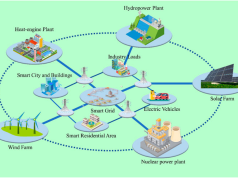
UK policymakers support smart energy systems that are also part of bigger plans for digital transformation. Buildings are no longer just things that stand alone. They are linked to city-level planning, pricing signals, and grids. Demand response programs reward being flexible. Buildings that can change how much energy they use become assets instead of drains.
There is also a quiet change in generations going on. Younger professionals want their workplaces to be responsive. They see that the air is stale, the temperatures are uneven, and the lights are being wasted. Smart buildings meet these needs in a way that is often not obvious. Comfort is no longer a bonus; it’s a normal part of life.
Not all implementations work. Too much automation can be bad. People often get angry when systems are set up without knowing how they will really be used. Even if the temperature is perfectly set and everyone feels wrong about it, it is still wrong. Energy control needs to find a balance between numbers and real life.
It is still hard to retrofit older buildings. Old buildings don’t like to have invasive upgrades done to them. Smart systems here tend to layer instead of replace, adding intelligence without changing the character. The outcome is flawed but frequently unexpectedly efficacious.
Cost is still a problem, especially for smaller projects. Even though there are long-term savings, the upfront cost can keep people from adopting. This has led to a demand for modular, scalable solutions that let buildings change over time. Automation doesn’t need a single, big jump anymore.
What stands out is how ordinary all of this has become. Smart energy systems don’t mean that the future is bright anymore. They show that you know what you’re doing. A building without them now feels strange: quiet, slow to respond, and not quite right with how work and life work.
Energy used to be a background cost, but now it’s a topic of conversation in the business world. Data lets buildings talk. Dashboards help managers listen. People who live there can feel the result without having to know how the machines work.
This isn’t about showing off your tech skills. It is about self-control. Smart energy systems work best when they are out of sight and out of mind, supporting comfort, efficiency, and sustainability without being noticed. How little they get in the way of daily life is what makes them successful.
Modern buildings are no longer just empty shells. Automation, energy control, and what people expect from them make them flexible places. The change has happened slowly, and sometimes unevenly, but it is now clear. Buildings have learned to listen.