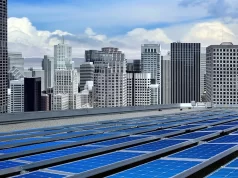
Rows of angled solar panels on the roofs of industrial complexes in Bristol and Manchester are subtly changing how companies view overhead. For many, spreadsheets, rather than environmental goals, were the catalyst for the change. For power-intensive operations, the continually increasing energy expenses are not just uncomfortably high, but also unsustainable. Every kilowatt matters since the cost of electricity is eroding profits at little over 22 pence per kilowatt-hour.
What is currently taking place is remarkably inventive as well as refreshingly realistic. Instead of viewing the midday sun as an annoyance to avoid, business owners see it as a very useful resource. CFOs can’t ignore the returns that solar panels are producing, especially when they are installed expertly and in the right size. A 100 kWp system producing 85,000 kWh annually might save about £19,000. That is a converted line item, not a side benefit.
Daytime energy use is common for wholesalers, manufacturers, and even mid-sized office centres. Thankfully, solar panels perform at their peak efficiency at that exact moment. The solar panels silently transform sunshine into usable electricity from approximately 8 a.m. to late afternoon, which corresponds with peak tariff hours. In addition to lowering overall grid demand, this also helps prevent those exorbitant peak fees.
The financial director of a logistics company in the Midlands that I visited last year informed me that they had anticipated small returns. “We were hoping for some breathing room, but it ended up being a full-blown oxygen tank,” she explained. In a little more than four years, that specific system paid for itself.
The mindset change, rather than the quickness of payback, was what most surprised me. Energy was an overhead prior to the installation. Following? It turned into a manageable asset. All around the nation, that silent but significant shift is taking place.
Not every company wants to invest a significant amount of money up front, and they are not required to. Power purchase agreements are becoming more popular, particularly with businesses that like fixed monthly expenses. The solar provider installs and maintains the system at no cost to the company under a PPA. In exchange, the company consents to purchase the electricity produced at a price that is usually 20–30% less than what the grid now charges. It’s especially advantageous for cash-flow-constrained companies looking to increase margins without taking on more debt.
Asset finance is another option. Many businesses discover that their monthly solar savings either equal or surpass the repayment costs when they spread out payments over a number of years. The system becomes budget-neutral—or better—from day one. Additionally, the energy generated is practically free throughout the panels’ remaining life—which can easily surpass 25 years—after the last payment is received.
Businesses can deduct 100% of the cost of commercial solar installation from taxable profits in the year of purchase by taking advantage of attractive tax relief provided by the Annual Investment Allowance. The payback period can be shortened by years with just that incentive. Furthermore, excess energy produced is not wasted. Businesses are able to sell it back to the grid through the Smart Export Guarantee. Each kilowatt exported increases the total return even when export rates are lower than import expenses.
The efficiency and dependability of solar technologies have significantly increased during the last ten years. These days, panels function reliably in the UK’s diverse weather. Even without batteries, some people still consider storage alternatives to be a luxury, although during regular business hours, solar installations offer significant cost savings.
The panels frequently span thousands of square feet, providing substantial size for big commercial structures. The solar project was spread over three connected warehouses at one location in Yorkshire. The business is currently investigating a second phase after reporting energy cost reductions of about 50%.
Energy independence has strategic worth in addition to economical ones. International politics, changing regulations, and erratic grid infrastructure have made it harder to forecast electricity prices. One method to stabilise a portion of your cost structure is to have your own generation capability. It’s about taking back control, not just cutting spending.
Concurrently, there is increasing pressure to exhibit environmental responsibility from customers, investors, and staff. One of the most obvious and quantifiable sustainability initiatives a business can use is solar electricity. It contributes to CSR programs, ESG scores, and even buying choices.
Businesses are also raising the value of their real estate by incorporating solar into their long-term plans. Because they have built-in operating efficiency, properties with on-site renewables are frequently more appealing to purchasers or tenants. The way commercial assets are assessed has undergone a minor but significant change.
Of course, there is no one-size-fits-all method for bringing about this change. Detailed energy modelling is the foundation for the best installations. Roof condition, load profile, and orientation are all important. Businesses who have tackled solar as a serious business decision, replete with feasibility studies, performance projections, and structured funding, rather than as a publicity stunt or gimmick, are reaping the most rewards.
Installation companies now provide end-to-end support—from design and DNO approvals to continuous system monitoring—through strategic partnerships. This allows business owners to concentrate on operations while their energy investment operates in the background.
Solar still functions, albeit at a lower capacity, during the colder months when the sky remains overcast and the days are shorter. However, the figures mount up during the year. Modern panels are calibrated for actual British circumstances, making them remarkably effective in the summer and still functional in the cold.
It is anticipated that more companies would use this strategy in the upcoming years. Sharp pencils and well-balanced books are driving it, not hype or vague environmental idealism. Solar panels have evolved from futuristic innovations to dependable, hard-working assets, much like a well-maintained delivery fleet or a strong IT system.
People who are as concerned about their numbers as they are about the environment are driving this transformation, which is quiet and intentional.
The sun has never appeared more lucrative in that equation.