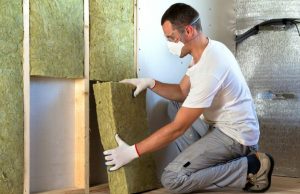
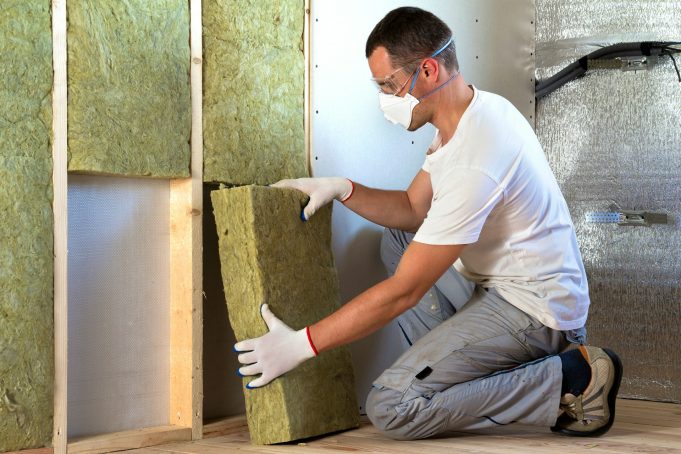
Insulation rarely features in architectural photographs. It does not gleam like glass façades or announce itself the way solar panels do. Yet it sits quietly behind walls and beneath floors, determining whether a building leaks energy or holds onto it. In the UK, where much of the housing stock predates modern standards, insulation has become less a technical detail and more a defining factor in how buildings behave.
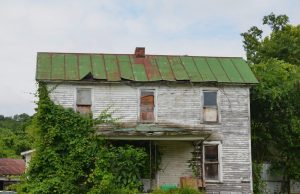
Older homes tell this story plainly. Victorian terraces with high ceilings and suspended floors were never designed to trap heat. They relied on fireplaces, thick curtains, and tolerance. Walk into one on a winter morning and you can often feel the temperature shift as you cross the threshold, a reminder that warmth escapes as easily as it enters. Heat loss is not theoretical there; it is physical and immediate.
Low-carbon buildings begin with a simple premise: energy not used does not need to be generated. Insulation addresses this at the most basic level. Before heat pumps, before smart controls, before renewable tariffs, there is the envelope of the building itself. Poor insulation turns even the cleanest energy source into a wasteful exercise.
The UK’s focus on thermal efficiency has sharpened in recent years, partly because energy costs made inefficiency impossible to ignore. Households began to understand, often through sharply rising bills, that draughts and thin walls were not just inconveniences but financial liabilities. Conversations about carbon followed naturally. Reducing heat loss became both an economic and environmental concern.
What insulation does, fundamentally, is slow down time. Heat generated indoors lingers longer. Systems cycle less frequently. Buildings stop behaving like sieves. This temporal shift is subtle but profound. A well-insulated room feels calmer, more stable, less reactive to weather outside. Occupants notice it even if they cannot articulate why.
In low-carbon design, insulation is often described as “fabric first,” a phrase that sounds technical but reflects an old-fashioned logic. Make the structure work before adding complexity. Without this foundation, low-carbon technologies struggle. Heat pumps in poorly insulated homes work harder and deliver less comfort. Mechanical ventilation systems compensate endlessly for leakage. Carbon savings shrink under the strain.
There is also a psychological dimension. People respond differently to spaces that maintain warmth without constant intervention. Thermostats are adjusted less frequently. Supplemental heaters stay unused. Comfort becomes passive rather than managed. Over time, this shapes behaviour in ways that no policy leaflet ever could.
I once stood in a newly retrofitted council flat where the heating barely seemed to switch on, and it struck me how unfamiliar that quiet efficiency still feels in the UK.
Insulation choices carry long consequences. Materials installed today will shape energy use for decades. That permanence raises the stakes. Decisions about thickness, placement, and breathability affect not only carbon performance but also moisture movement and indoor air quality. Poorly executed insulation can trap damp, creating problems that undermine trust in retrofitting altogether.
This tension has slowed progress. Stories of failed installations circulate quickly, especially among homeowners wary of disruption. Yet when insulation is done well, it rarely becomes a topic of conversation again. That invisibility is both its weakness and its strength. Success is silent.
Policy has begun to catch up with this reality, though unevenly. Building regulations now recognise the importance of thermal efficiency, but enforcement varies. Retrofitting older properties remains complex, particularly in conservation areas where external changes are restricted. Internal insulation offers solutions but comes with trade-offs, reducing room sizes and complicating detailing.
Low-carbon buildings are often discussed as future projects, but insulation anchors them in the present. It is one of the few interventions that improves existing buildings immediately. Carbon reductions are realised the moment heat loss decreases. There is no waiting for grid decarbonisation or behavioural change. Physics does the work.
Thermal efficiency also reframes equity. Fuel poverty in the UK is not only about income but about building performance. Two households with identical earnings can face vastly different energy outcomes depending on insulation quality. Improving the fabric of homes reduces this disparity quietly, without stigma or surveillance.
Construction professionals often describe insulation as unglamorous, yet those working closest to low-carbon targets understand its centrality. Engineers design systems smaller when insulation improves. Architects gain flexibility. Maintenance costs fall. The building becomes easier to live with.
There is a lesson here about scale. National carbon targets are built from millions of small decisions: a loft insulated, a cavity filled, a floor sealed. Each reduces heat loss marginally, but together they reshape demand. Insulation does not ask people to live differently. It allows them to live as they already do, but with less waste.
Public understanding is shifting slowly. Media attention still gravitates toward visible technologies, but insulation increasingly appears in quieter features, case studies, and cost breakdowns. It is discussed not as a virtue but as a necessity. That change in tone matters.
Low-carbon buildings are often imagined as advanced or futuristic, yet insulation points backward as much as forward. It echoes older building traditions that valued mass, shelter, and protection from the elements. The difference now is precision. Materials are engineered. Performance is measured. Heat loss is quantified rather than guessed.
In the end, insulation’s role in low-carbon buildings is less about innovation than discipline. It requires patience, planning, and a willingness to prioritise what cannot be seen. The reward is a building that consumes less by default, without demanding attention or admiration.
That quiet effectiveness is why insulation remains the foundation. Everything else depends on it, even if it rarely gets the credit.