
Change in building standards rarely makes headlines outside the construction sector, yet it touches every home, office, and school in the country. The Grenfell Tower tragedy in 2017 jolted public consciousness into a stark awareness of what these regulations mean—and, sometimes, what happens when they fail. Suddenly, a conversation that had long simmered in technical committees found its way into living rooms: how safe are our buildings? How often should the rules themselves be questioned, rewritten, or reinforced?
The evolution of building standards in the UK is a slow-moving but highly responsive process. Each revision represents not just a bureaucratic exercise, but a societal response to emerging threats, changing materials, and fresh research. Take fire safety: long before Grenfell, there were warnings, tests, and lessons from smaller incidents. Yet it was only after catastrophe that reform accelerated. The tragedy didn’t invent the risk—it revealed the gaps in assumptions, in enforcement, in awareness.
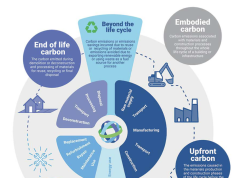
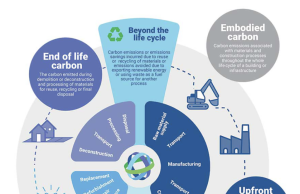
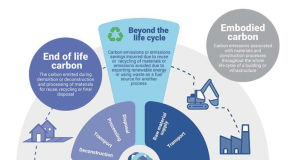
Sustainability is another driver shaping the future of building codes. Current regulations now consider energy efficiency, carbon footprints, and long-term environmental impact in ways that would have been unimaginable thirty years ago. Insulation, ventilation, heating systems, and even the orientation of buildings are now regulated to reduce emissions and improve resilience. These requirements are not static; they tighten as scientific understanding grows and as national targets—like the UK’s net zero ambition—come into sharper focus.
Technology introduces both opportunities and challenges. Modern digital design tools allow architects to simulate airflow, sunlight, or structural stress with extraordinary precision. Smart sensors can monitor buildings in real time, offering a continuous feedback loop on everything from fire alarms to energy usage. Yet, these same technologies demand that standards evolve to accommodate them safely. There is an ongoing tension between innovation and regulation: the rules cannot stifle creativity, but neither can they lag behind it.
I remember visiting a new housing development on the oucartskirts of London, where walls were filled with unfamiliar composites and windows had sensors embedded in their frames. The builders explained the codes they were following, and I was struck by how much had changed in just a decade.
Health considerations are increasingly factored into the standards. Indoor air quality, natural light, accessibility, and even mental well-being are gaining recognition alongside structural safety. What once was viewed as merely functional—walls, roofs, and fire doors—is now part of a broader conversation about human comfort and resilience. As populations age, as cities densify, these elements become more than optional—they are integral to what constitutes a “good” building.
Economic pressures complicate the picture. Developers often push back against tighter standards, citing costs and delays. Politicians, local authorities, and the public must balance ambition with feasibility. Sometimes regulations are phased in gradually to give industries time to adapt. Other times, emergencies force sudden revisions. The rhythm of building standards is therefore uneven, almost improvisational, shaped by crises, politics, and technological breakthroughs alike.
There is also a subtle cultural element in the evolution of building codes. In the UK, there is a long-standing tension between preserving architectural heritage and embracing modern efficiency. Retrofitting listed buildings to meet contemporary energy or safety standards often involves intricate compromises, requiring bespoke solutions that challenge conventional wisdom. Each iteration of the code must navigate these cultural and historical nuances, making the process more than just technical—it becomes a negotiation with memory and identity.
Future building codes will increasingly have to account for climate unpredictability. Flood-prone zones, heatwaves, and urban microclimates all demand a more dynamic approach to standards. The architects and engineers I’ve spoken to describe a world where codes are no longer fixed manuals but living documents, responsive to new data, and flexible enough to integrate emerging technologies without compromising safety.
Change is rarely smooth, and the very pace of evolution can breed uncertainty. Builders and regulators alike face the challenge of interpreting vague language, testing novel materials, or responding to unprecedented scenarios. Yet this is precisely why standards must evolve: complacency is the greater risk. Every amendment, every new clause, is a small act of foresight, an attempt to prevent accidents before they happen rather than respond after.
The next decades are likely to see standards that blend old wisdom with new imperatives. Net zero carbon will no longer be aspirational—it will be codified. Digital twins, AI monitoring, and adaptive materials may become standard expectations, not futuristic experiments. Urban planning will integrate resilience more deeply into housing, infrastructure, and public spaces. Each change will ripple through budgets, construction timelines, and professional education, shaping not just the physical landscape, but the social one as well.
At its core, the evolution of building standards is about learning from mistakes and imagining better futures. It is incremental, reactive, yet profoundly creative. Every revision contains lessons, sometimes hard-learned, about safety, sustainability, and the kind of society we want to inhabit. These rules are more than regulations; they are a reflection of values in brick, steel, and glass.