On cold mornings in British cities, you can often see it before you measure it. Steam curling from boiler flues, shop doors left open for warmth rather than welcome, office lights burning long after the last meeting ended. Buildings announce their energy use quietly but persistently, through habits and designs that have become normal over decades. The UK’s carbon story is written as much in brickwork and pipework as it is in power stations.
Most of the emissions tied to buildings come from something unglamorous and deeply personal: heat. Space heating and hot water dominate energy use in buildings UK-wide, largely because the country still leans heavily on gas boilers. They are reliable, familiar, and deeply embedded in post-war housing policy. Walking through a 1970s estate, you can almost sense how design decisions made during cheap-energy decades still dictate carbon outcomes today.
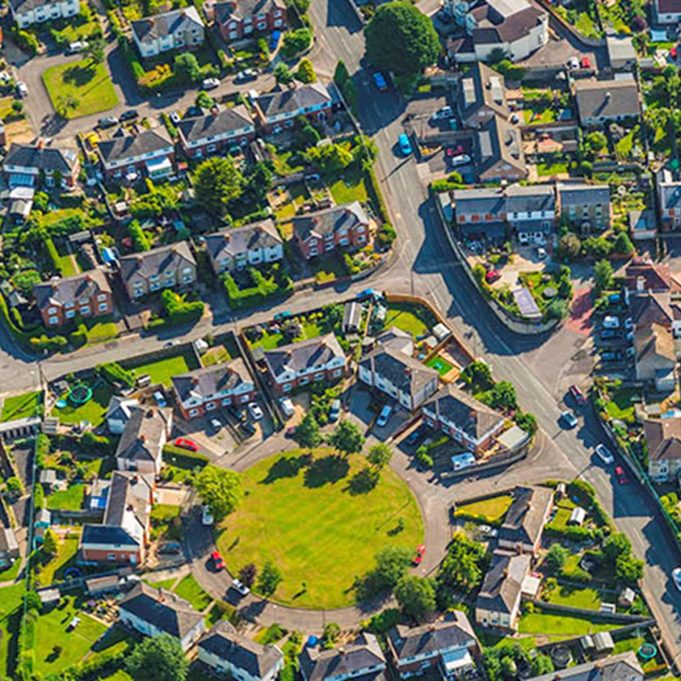
The age of the housing stock matters more than many people realise. Victorian terraces, Edwardian semis, and post-war flats were not built with airtightness or insulation in mind. Retrofitting them is slow, expensive, and disruptive. Loft insulation is one thing; solid wall insulation is another entirely, especially when façades are protected or streets are narrow. Every draught under a door adds up, not just to discomfort but to national emissions totals.
Commercial buildings tell a slightly different story, though not a cleaner one. Offices, retail spaces, and warehouses consume vast amounts of electricity for lighting, servers, cooling, and equipment. Many were designed around assumptions that no longer hold: full occupancy, long opening hours, cheap power. Even now, it is common to find half-empty offices fully lit on a Friday evening, energy use disconnected from actual human presence.
Retail spaces are particularly revealing. I once stood in a shopping centre late one winter evening, surprised by how warm it felt despite most shops being closed. Heating and lighting continued as if the day had not ended, an operational inertia that felt oddly symbolic. Buildings carbon emissions in the UK are often less about technical impossibility and more about routines that no one has questioned recently.
Policy has tried to intervene, with mixed success. Energy Performance Certificates were meant to nudge landlords and owners toward efficiency, yet they are frequently treated as paperwork rather than guidance. A building can scrape a pass while still bleeding heat through poorly sealed roofs or outdated systems. The Future Homes Standard promises progress for new builds, but new builds form only a small slice of what actually stands across the country.
Public buildings occupy a special place in this discussion. Schools, hospitals, and council offices are visible, politically sensitive, and often cash-strapped. Many operate out of ageing stock with heating systems nearing the end of their life. During energy price spikes, these buildings become case studies in difficult trade-offs: heating classrooms versus balancing budgets, patient comfort versus long-term sustainability.
Domestic energy use is more emotionally charged. People notice when their homes are cold or bills rise sharply. Yet behaviour changes alone rarely deliver the scale of reductions needed. Turning down thermostats helps, but it does not replace the structural inefficiency of a poorly insulated house. The narrative that individual responsibility will solve buildings carbon emissions UK-wide feels increasingly thin when confronted with systemic constraints.
There is also a regional dimension that often gets overlooked. Older housing stock is concentrated in certain parts of England, while Scotland and Wales face their own retrofit challenges shaped by climate and building type. Rural homes off the gas grid rely on oil or LPG, complicating decarbonisation further. National averages smooth over these uneven realities.
Halfway through writing this, I caught myself thinking about how often the conversation jumps to future technology while the existing buildings around us quietly continue as they always have.
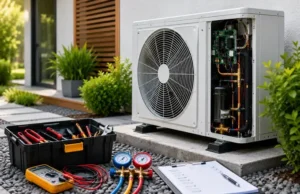
Electrification is frequently presented as the inevitable solution. Heat pumps, district heating, and smart controls all promise lower emissions. Yet deployment remains uneven. Heat pumps work best in well-insulated homes, which many UK properties are not. Retrofitting at scale requires skilled labour, supply chains, and public trust, all of which take time to build.
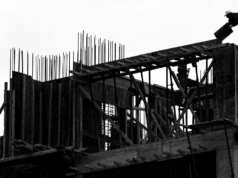
Embodied carbon adds another layer of complexity. Demolishing inefficient buildings and replacing them with high-performance ones can look attractive on paper, but the carbon cost of construction materials is significant. Concrete and steel carry heavy emissions footprints. Sometimes the greener option is to improve what already exists, even if the result is imperfect.
Office culture has shifted since the pandemic, but buildings have been slow to adapt. Hybrid working has reduced occupancy without proportionally reducing energy use. Heating systems still run to schedules set years ago. Lighting plans assume desks are full. The mismatch between actual use and energy demand has become one of the quiet inefficiencies of the current moment.
What strikes me most is how visible the solutions often are once you start looking. Draft-proofed doors, zoned heating, better controls, maintained insulation. None are revolutionary. Yet they require coordination, upfront investment, and a willingness to disrupt the familiar. Buildings rarely change quickly because they sit at the intersection of private ownership, public regulation, and personal comfort.
The UK’s path to lower building emissions will likely be incremental rather than dramatic. Progress will come through a thousand small decisions: a landlord choosing a better boiler, a council upgrading controls, a developer designing for long-term efficiency rather than minimum compliance. The cumulative effect matters, even if it lacks the spectacle of a new power plant or wind farm.
In the end, buildings reflect the values of the era in which they were shaped. Many of the structures responsible for today’s emissions were created when energy was cheap and carbon was an abstract concept. The challenge now is not just technical but cultural, learning to see warmth, light, and space as resources to be managed rather than assumed. The walls will still stand tomorrow; the question is how much carbon they will quietly release while we are not looking.